
Why Auto Lots in California Are High-Value Targets
In fact, auto lots concentrate dozens — sometimes hundreds — of high-value assets in a single open location. As a result, that makes them an obvious target. Effective auto lot security monitoring starts with understanding the specific risks your property faces.
Catalytic converter theft has become a separate epidemic. Additionally, thieves can strip a converter in under two minutes, often targeting entire rows of vehicles on a single night. Additionally, vandalism, break-ins, and test-drive fraud add layers of financial exposure that insurance alone cannot fully cover. Because of this, reactive security measures simply are not enough. Professional auto lot security monitoring creates a protective layer that traditional methods cannot match.
Fleet yards face a different but equally serious threat profile. Furthermore, commercial vehicles, heavy equipment, and overnight-stored cargo represent significant asset value. Furthermore, these yards often sit in industrial zones with limited natural surveillance, making after-hours auto lot security monitoring absolutely essential.
The Four Biggest Threats to Auto Lots and Dealerships
1. After-Hours Vehicle Theft
Most auto lot thefts happen between midnight and 5 a.m. Moreover, criminals scout lots in advance, identify vehicles without GPS tracking, and move quickly. However, traditional alarm systems trigger after the fact — by then, the vehicle is gone. Meanwhile, in contrast, live video monitoring catches suspicious behavior before a theft is completed. When evaluating auto lot security monitoring options, California property managers should consider both cost and coverage.
Active deterrence changes the math entirely. When a live agent spots someone moving through a lot at 2 a.m., they can trigger an audio warning and alert law enforcement. Consequently, document everything on camera — all within seconds. Similarly, that response time makes the difference between a police report and a recovered vehicle. Comprehensive auto lot security monitoring effectively addresses both interior and exterior vulnerabilities.
2. Catalytic Converter Theft
Catalytic converters contain precious metals — palladium, platinum, and rhodium — that thieves sell for hundreds of dollars each. Most importantly, a single hit on a lot of hybrid vehicles can cost a dealership $50,000 or more in replacement parts and lost sales. Additionally, insurance claims drive up premiums over time, compounding the financial damage. Modern auto lot security monitoring technology delivers real-time threat detection and rapid response.
AI-powered cameras equipped with motion detection and thermal imaging can flag activity underneath vehicles — exactly where converter thieves operate. However, AI alone is not enough. In other words, human verification by a live monitoring agent ensures that real threats trigger real responses, not just recorded footage. Smart auto lot security monitoring systems integrate cameras, sensors, and live monitoring to provide comprehensive protection.
3. Vandalism and Property Damage
Vandalism ranges from keyed paint jobs to smashed windshields to graffiti on showroom glass. That said, each incident creates repair costs, delays vehicle sales, and damages the dealership’s reputation. For example, a single weekend of unchecked vandalism at a used-car lot can easily amount to $10,000 to $20,000 in damage. Reliable auto lot security monitoring reduces liability and demonstrates due diligence to insurance carriers.
Consistent auto lot security monitoring creates a visible deterrent. Specifically, cameras mounted on poles, trailers, or perimeter fencing send a clear message: this property is watched. As a result, opportunistic vandals typically move on to easier targets.
4. Test-Drive Fraud and Internal Theft
Test-drive fraud is more common than most dealerships admit. On top of that, individuals take vehicles on test drives and never return, or swap VIN plates and return a different car. Because of this, internal theft, including accessory theft and key duplication, adds another layer of exposure. Therefore, monitoring inside the lot and at entry and exit points matters just as much as perimeter surveillance. Advanced auto lot security monitoring solutions combine AI-based detection with human verification to reduce false alarms.
How Auto Lot Security Monitoring Actually Works
Modern auto lot security monitoring combines three core technologies: AI-powered cameras, live human agents, and mobile response units. To put it simply, each layer handles a different part of the threat equation. This is why together, they create a system that detects, verifies, and responds — rather than simply recording.
AI-Powered Cameras: Detection at Scale
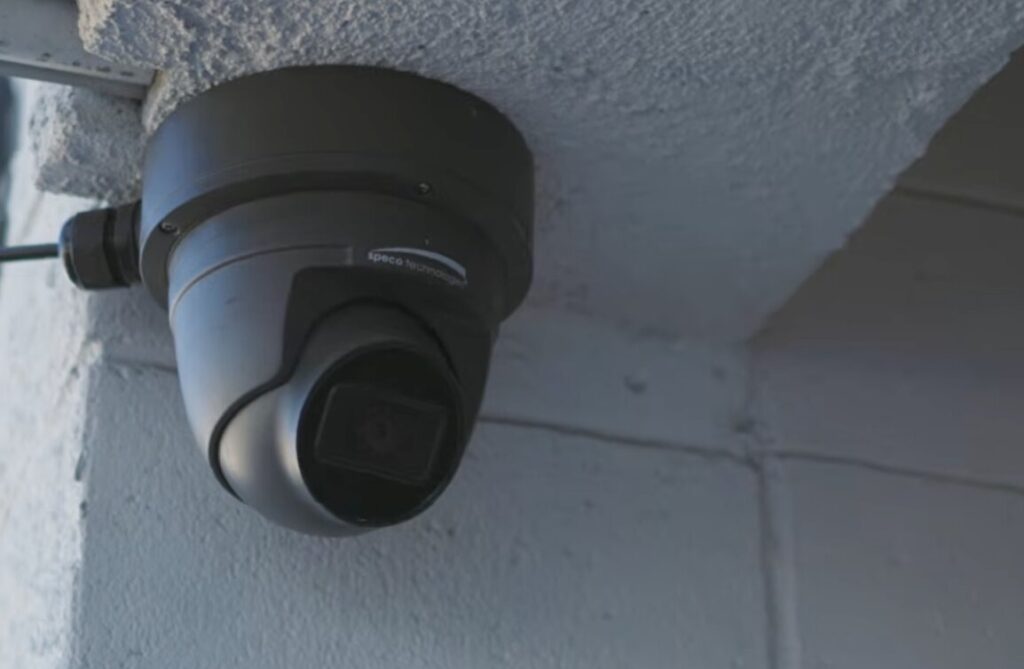
AI cameras use machine learning to distinguish between normal activity and genuine threats. Also, they track motion patterns, flag unusual behavior, and filter out false alarms caused by animals or passing headlights. Because of this, live agents receive only verified alerts — not a constant stream of noise. Investing in auto lot security monitoring pays for itself through reduced theft, vandalism, and liability claims.
At Guardian Integrated Security, our camera systems cover wide lot areas with high-resolution, night-vision-capable units. Furthermore, they integrate with our central monitoring platform, giving agents a real-time view of every camera angle simultaneously. Still, that level of coverage is simply not possible with a single on-site guard walking a patrol route. The best auto lot security monitoring programs layer multiple technologies for overlapping coverage zones.
Live Human Agents: Verification and Response
Technology detects. People decide. Rather, our professional monitoring center operates 24/7 with live agents based in Los Angeles. When an AI alert fires, a trained agent reviews the footage immediately and assesses the threat level. Instead, it takes action — whether that means broadcasting a voice warning, contacting the property manager, or directly dispatching law enforcement. Effective auto lot security monitoring starts with understanding the specific risks your property faces.
This human-in-the-loop model is what separates true virtual guarding and live video monitoring from basic camera recording. Otherwise, recorded footage is useful after a crime. Next, live monitoring prevents crimes from being committed in the first place. Finally, that distinction matters enormously for high-value auto lot environments. Professional auto lot security monitoring creates a protective layer that traditional methods cannot match.
Mobile Surveillance Units: Flexible Coverage
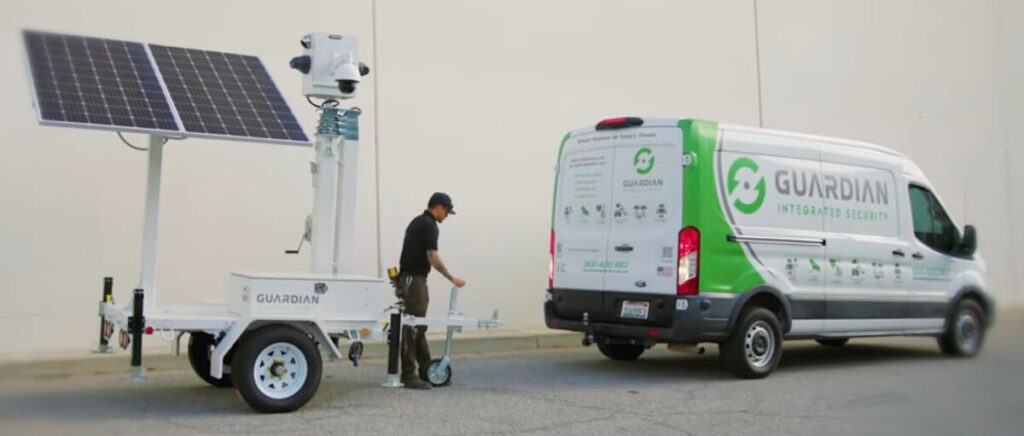
Not every auto lot has the infrastructure for a permanent camera network. For example, mobile surveillance units solve that problem. In fact, Guardian’s Guardian3 surveillance trailer deploys quickly to any lot, runs on solar power, and connects directly to our monitoring center. As a result, it requires no trenching, no cabling, and no lengthy installation timeline.
Additionally, the AiGuard unit provides a compact, high-tech option for smaller lots or targeted coverage zones. Additionally, such as the area behind the service department or along a back fence line where converter theft is most common. Furthermore, these units make professional-grade auto lot security monitoring accessible to independent dealers and smaller fleet operations, not just large franchise groups.
Auto Lot Security Monitoring vs. Traditional On-Site Guards
Many dealership owners default to hiring a security guard because it feels familiar. However, the numbers tell a different story. Moreover, a full-time on-site guard costs between $80,000 and $120,000 per year when you factor in wages, benefits, training, and management overhead. However, guardian’s remote monitoring solutions run up to 70% cheaper — and provide broader, more consistent coverage. Meanwhile, this is a key consideration for any effective auto lot security monitoring strategy.
✓ Key Takeaway:
Guardian Integrated Security operates a professional monitoring center with live agents based in Los Angeles, providing 24/7, 365-day-a-year service. Most remote security providers cannot make this claim.
A human guard can only be in one place at a time. Consequently, one guard covering a large lot has significant blind spots — and fatigue, distraction. Similarly, inconsistency is a real factor during overnight shifts. Most importantly, in contrast, a network of AI cameras monitored by a live agent team covers every corner of the property simultaneously, all night, every night.
Furthermore, when an incident occurs, our monitoring center provides documented video evidence to support insurance claims and law enforcement investigations. In other words, that documentation is immediate and complete — not dependent on a guard’s verbal account after the fact.
There are situations where a physical presence adds value. That said, high foot traffic during business hours, VIP customer interactions, or locations with specific compliance requirements. Specifically, for those scenarios, a hybrid security approach for car dealerships combines the cost efficiency of remote monitoring with strategically placed on-site personnel. On top of that, that combination delivers the best of both models without paying full price for each.
Choosing the Right Auto Lot Security Monitoring Setup
The right system depends on the size and layout of your lot, your specific threat history, and your budget. However, most auto lots in California share a common set of needs. Here is what a well-designed monitoring program typically includes. Auto lot security monitoring plays a direct role here.
- Perimeter cameras: High-resolution units covering all entry points, fence lines, and vehicle access lanes.
- Interior coverage: Cameras positioned across vehicle rows, the service bay area, and any indoor showroom spaces.
- AI analytics: Motion detection, loitering alerts, and under-vehicle activity flags to protect catalytic converters.
- Live monitoring: 24/7 agent oversight with active deterrence capabilities — two-way audio, alarm triggers, and direct law enforcement dispatch.
- Mobile units: Deployable trailers or standalone units for overflow lots, temporary storage areas, or locations undergoing camera installation.
- Vehicle patrols: Periodic physical checks by a mobile patrol unit to supplement remote coverage during high-risk hours.
Additionally, a professional security assessment identifies the specific vulnerabilities on your lot before a criminal does. Because of this, Guardian’s team has protected California auto lots, fleet yards, and dealerships for over a decade. To put it simply, we understand how California thieves operate — and how to position technology to stop them.
Auto Lot Security Monitoring for Fleet Yards and Used Car Operations
Fleet yards present unique monitoring challenges. This is why vehicles often sit unattended for extended periods between assignments. Also, employee access during off-hours is difficult to track without video records. Furthermore, fleet yards frequently store equipment, tools, and cargo alongside vehicles — all of which are potential targets for theft.
Auto lot security monitoring for fleet operations should prioritize gate access control, perimeter coverage, and interior lot mapping. Still, AI cameras with license plate recognition add an additional layer — logging every vehicle that enters or exits. Rather, flag any plate that does not match an authorized list.
Used car lots face budget constraints that franchise dealers do not. However, that does not mean accepting lower-quality protection. Instead, mobile surveillance trailers make enterprise-grade monitoring affordable for independent operators. Otherwise, a single unit can cover an entire small lot and connect directly to our Los Angeles monitoring center. Next, the ASIS International security guidelines consistently emphasize layered security strategies. Finally, that principle applies equally to independent used car lots as it does to large dealership groups.
Key Coverage Zones for Used Car Lots
Every used car lot has three zones that require dedicated camera coverage. First, the street-facing perimeter — where vehicles are most visible and most accessible from the road. Second, the back of the lot — typically the lowest-traffic area and the most common target for after-hours theft. Third, the key box and office area, where master keys are stored, has the highest risk of internal theft.
Addressing all three zones creates a comprehensive monitoring picture. For example, that picture gives our live agents the context they need to verify threats accurately and respond decisively.
What to Expect When You Work With Guardian
Guardian Integrated Security brings over a decade of California-specific security experience to every auto lot engagement. In fact, our process starts with a no-cost security assessment — we evaluate your lot layout, identify gaps in current coverage. As a result, we recommend a monitoring plan built around your specific threat profile.
Our professional monitoring center operates from Los Angeles, 24 hours a day, seven days a week. Additionally, every alert is reviewed by a trained human agent. Furthermore, not routed through an offshore call center or handled by automation alone. That local presence matters. Moreover, our agents understand California geography, local law enforcement response times, and the regional patterns of auto lot crime.
Additionally, our systems integrate with your existing camera infrastructure where possible. However, that means you may not need to replace what you already have. Meanwhile, just connect it to a monitoring platform that actually responds. Furthermore, if your lot needs new hardware, our installation team handles everything from camera placement to mobile unit deployment.
Most clients see measurable results within the first 30 days — fewer incidents, faster law enforcement response. Consequently, and documented deterrence that lowers insurance premiums over time. Similarly, the return on investment has driven auto lot security monitoring from a luxury to a standard operating requirement for serious operators in California.
Still Wondering If the Cost Is Justified?
This is the most common hesitation we hear: the upfront cost of a professional monitoring system feels significant compared to doing nothing. However, consider what doing nothing actually costs. Most importantly, a single catalytic converter theft on a row of hybrids can run $30,000 to $50,000 in parts and lost inventory. In other words, one vehicle theft, one vandalism incident, or one fraudulent test drive can wipe out months of monitoring costs in a single night.
Guardian’s remote monitoring solutions cost up to 70% less than a full-time on-site guard. That said, they cover more ground, more consistently, with documented evidence for every incident. Specifically, the question is not whether auto lot security monitoring is affordable. On top of that, the question is whether you can afford to operate without it.
If you manage a dealership, a used car lot, or a commercial fleet yard in California, contact our team for a free security assessment. Because of this, we will walk your property and identify your vulnerabilities. To put it simply, and recommend a monitoring plan that fits your operation and your budget — no pressure, no generic proposals.