Commercial Property Security California
In This Article
- What California Law Says About Loitering on Commercial Property
- Why Loitering on Commercial Property Escalates Quickly
- Environmental Design Strategies That Deter Loitering
- How Live Audio Warnings Stop Loitering in Real Time
- AI-Powered Remote Monitoring vs. on-site security guards
- Mobile Patrol as a Complement to Remote Monitoring
- Choosing the Right Security Strategy for Your Property Type
- Still Wondering If Remote Monitoring Really Works After Hours?
Loitering on commercial property in California is more than a nuisance — it creates real liability, drives away customers, and can escalate into vandalism, theft, or violence. If you manage a commercial property in California, you need a clear plan for deterring loitering legally and effectively. This guide covers California law, environmental design strategies, and modern security solutions that actually work.
What California Law Says About Loitering on Commercial Property
Two sections of California law are most relevant to loitering on commercial property in California: Penal Code 647 and Penal Code 602.
Penal Code 647 defines disorderly conduct and covers loitering in public spaces with intent to commit a crime. However, it requires law enforcement to establish criminal intent — which makes enforcement inconsistent and difficult.
Penal Code 602 is more actionable for property owners. It covers trespassing on private property. Because of this, most commercial property owners rely on PC 602 when requesting police removal of individuals who refuse to leave after being asked. Posting visible “No Trespassing” signage strengthens your legal standing significantly.
Additionally, California courts have narrowed anti-loitering statutes over the years, making proactive deterrence more important than ever. Waiting for police response is rarely fast enough to prevent the escalation that follows prolonged unauthorized presence. According to California Department of Justice crime statistics, property crimes remain among the most frequently reported offenses statewide — and loitering is a common precursor.
Why Loitering on Commercial Property Escalates Quickly
Most property managers underestimate how fast loitering turns into a larger problem. First, uninvited individuals test boundaries. Then, they return with others. Within days, what started as two people outside your back entrance becomes a regular gathering that intimidates employees and customers alike.
Furthermore, commercial properties that fail to respond early signal low risk to bad actors. Graffiti appears. Trash accumulates. Break-ins follow. This is sometimes called the Broken Windows Effect — and it is well-documented in criminology research. ASIS International, the leading professional association for security managers, consistently identifies deterrence as the most cost-effective crime prevention strategy for commercial sites.
That means acting on the first signs of loitering — not the fifth or tenth — is the most practical approach for California commercial property owners.
Environmental Design Strategies That Deter Loitering
Crime Prevention Through Environmental Design (CPTED) gives property owners physical tools to reduce loitering before it starts. These changes reduce opportunity and comfort for unauthorized gatherings without requiring ongoing staffing.
- Lighting: Install bright, motion-activated lighting in parking lots, loading docks, and building perimeters. Poor lighting is one of the most common factors in repeat loitering incidents.
- Landscaping: Trim hedges and remove dense shrubs near entrances. Eliminate hiding spots that give loiterers privacy and concealment from street view.
- Seating removal: Remove or redesign benches, ledges, and flat surfaces that invite extended stays near entrances, dumpsters, or side corridors.
- Signage: Post clear, visible “No Trespassing” signs under California Penal Code 602. This is a legal requirement before trespass enforcement applies.
- Access control: Use fencing, gates, and keycard entry to limit access to non-public areas where loitering most frequently occurs.
These measures reduce loitering on commercial property in California without requiring a security guard to be physically present at every vulnerable point. However, environmental design alone is not enough once determined individuals have already established a pattern.
How Live Audio Warnings Stop Loitering in Real Time
One of the most effective — and underused — tools for stopping loitering on commercial property is live audio intervention. When a trained security agent spots unauthorized activity on camera, they issue a direct verbal warning through an on-site speaker system. This is not a recorded message. A real person tells the individual to leave immediately. This is a key consideration for any effective loitering commercial property California strategy.
The effect is immediate. Most loiterers leave within seconds of hearing a live voice address them directly. They realize they are being watched in real time. That awareness eliminates the sense of anonymity that makes loitering feel low-risk in the first place.
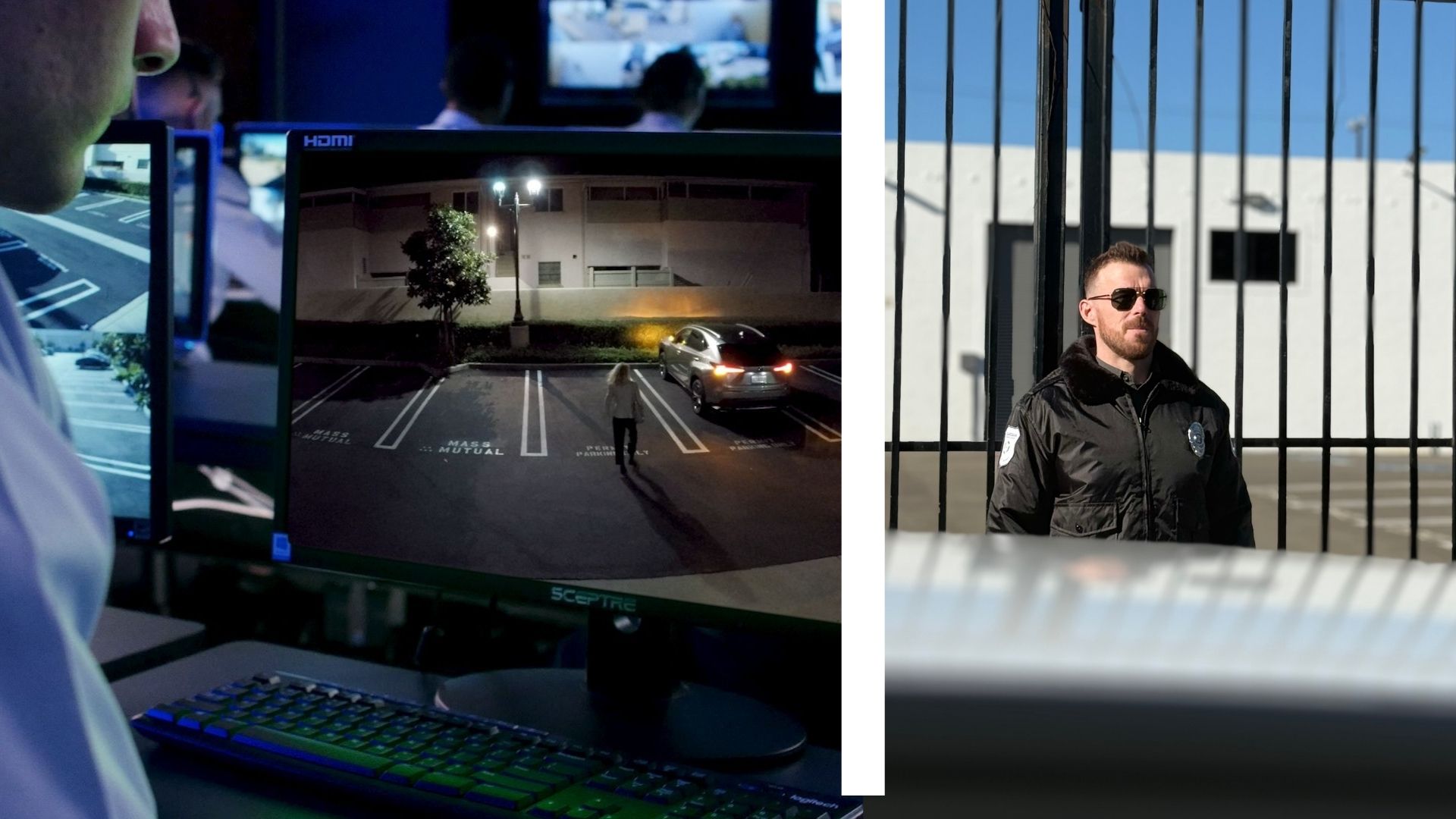
Our virtual guarding and live video monitoring service uses exactly this approach. Guardian’s professional monitoring center in Los Angeles operates 24 hours a day, 7 days a week. Our agents watch live feeds from your property and intervene the moment unauthorized activity appears — whether that is loitering, trespassing, or suspicious behavior near access points.
Additionally, live audio warnings create a documented record of each incident. That documentation strengthens your case if police involvement or legal action becomes necessary later.
AI-Powered Remote Monitoring vs. on-site security guards
For years, the default answer to loitering on commercial property was to hire an on-site security guard. Guards provide a visible deterrent and can physically approach individuals. However, they come with significant limitations — and significant costs.
Guardian Integrated Security operates a professional monitoring center with live agents based in Los Angeles — 24/7, 365 days a year. Most remote security providers cannot make this claim.
A full-time on-site guard in California can cost between $25 and $45 per hour. For 24/7 coverage across multiple entry points, that expense grows fast. Furthermore, a guard at a front post cannot simultaneously monitor a rear parking lot, a side corridor, and a loading dock.
In contrast, AI-powered remote monitoring covers your entire property at once. Guardian’s camera systems use AI-powered detection technology to flag human activity in real time. Our live agents in Los Angeles then verify the alert and respond — eliminating the false alarm problem that plagues automated-only systems. Because of this two-layer approach, you get faster response, broader coverage, and far better cost efficiency.
Guardian’s remote monitoring service costs up to 70% less than a traditional on-site security guard. For multi-site property managers or large commercial campuses, that difference is substantial. Our virtual guards provide the same deterrence value without the overhead.
Mobile Patrol as a Complement to Remote Monitoring
Some commercial properties security in California benefit from combining remote monitoring with periodic physical presence. Mobile patrol units visit your property on scheduled or randomized routes, providing a visible deterrent that reinforces your camera coverage.
This approach works particularly well for large parking lots, warehouses, and commercial campuses where loitering tends to concentrate in isolated areas outside primary camera angles. A patrol vehicle appearing unexpectedly is a powerful deterrent — even without any contact occurring.
Guardian’s business vehicle patrol service covers commercial properties across Los Angeles and California. Our patrol officers are trained to document loitering incidents, issue verbal warnings, and coordinate with law enforcement when necessary. Combined with live remote monitoring, mobile patrol creates a layered defense that addresses loitering at every level.
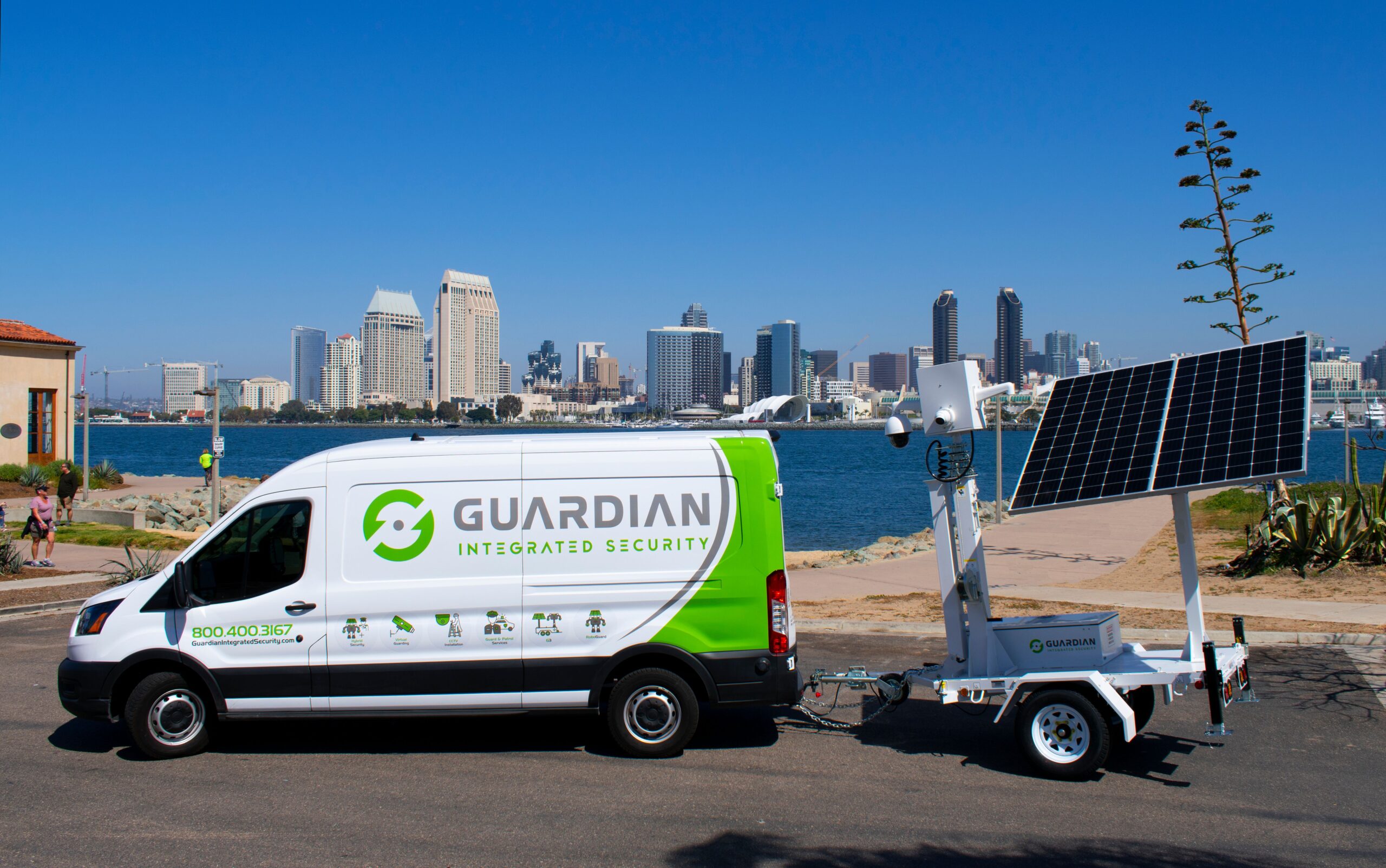
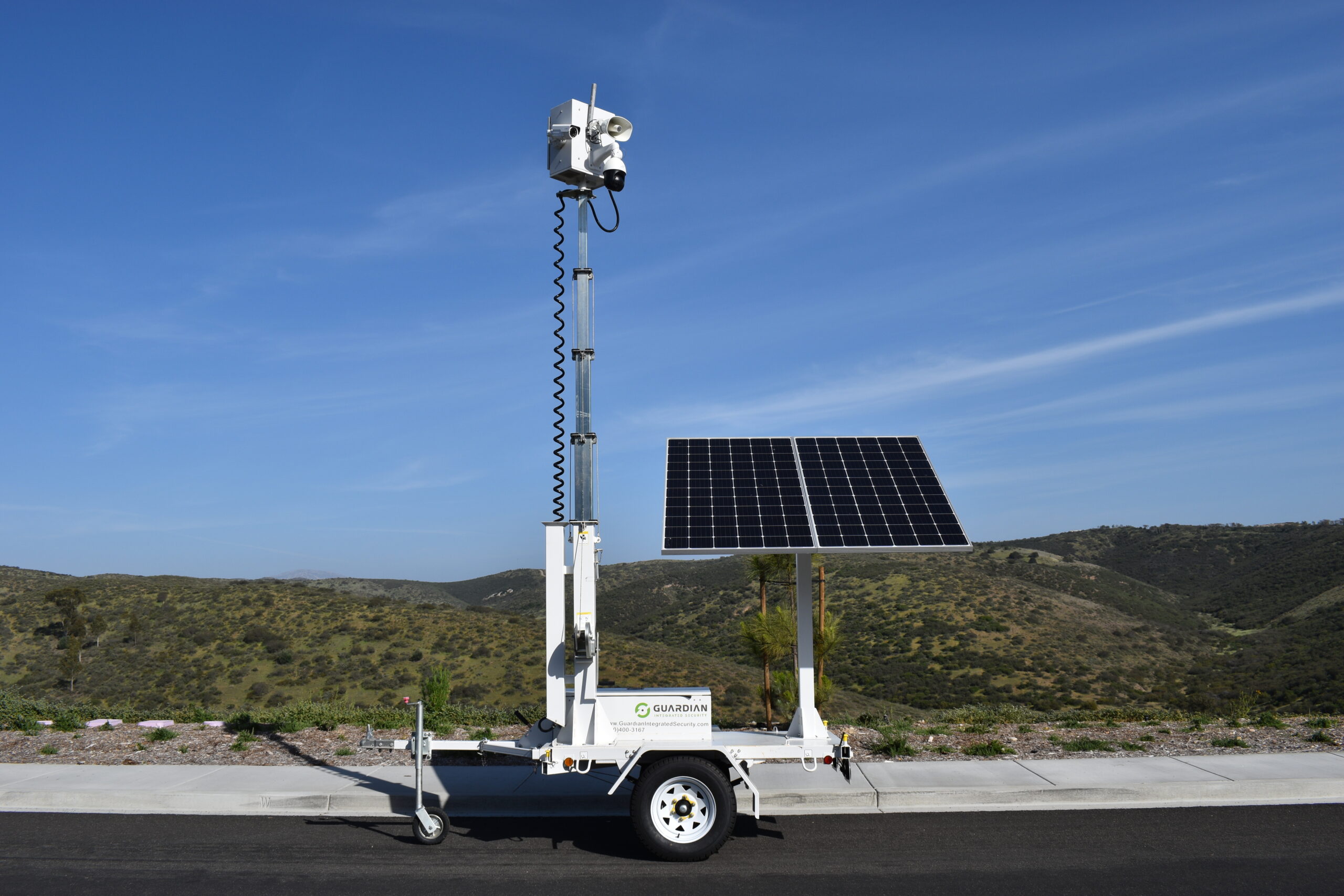
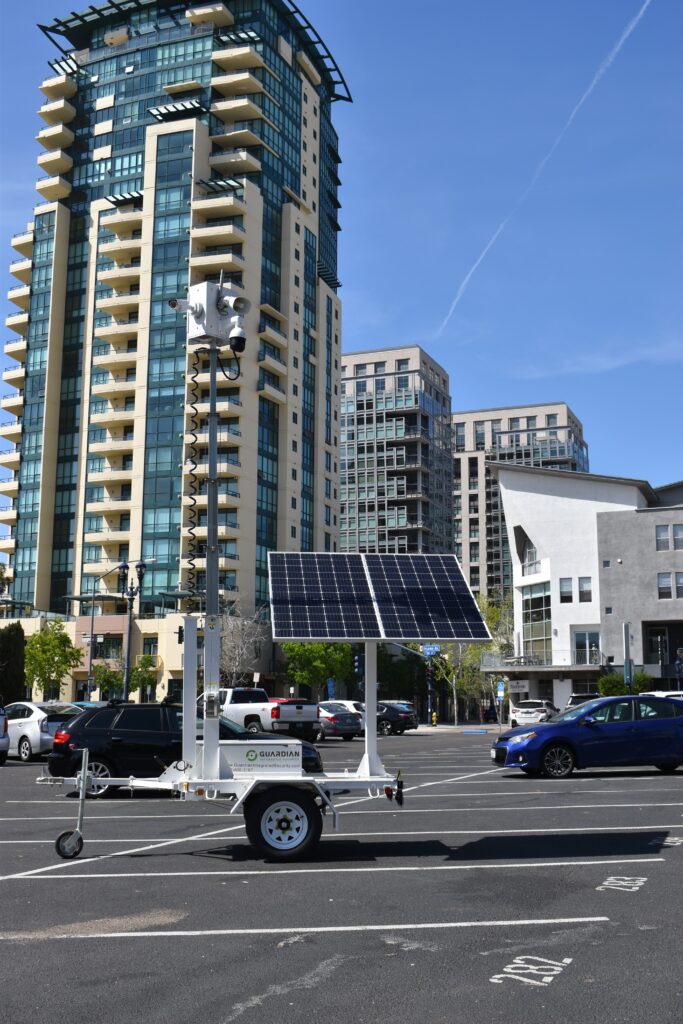
For properties that need a temporary or relocatable solution — construction sites, large outdoor events, or seasonal commercial operations — our Guardian3 mobile surveillance trailer provides rapid deployment camera coverage without requiring permanent installation.
Choosing the Right Security Strategy for Your Property Type
Not every commercial property faces the same loitering risk. Your solution should match your specific environment.
- Retail centers and strip malls: High foot traffic creates more loitering opportunities. Live video monitoring with audio intervention works best here. See our retail store security solutions for more detail.
- Parking lots and garages: Low staffing and poor sightlines make these high-risk zones. Remote monitoring combined with mobile patrol is the most effective combination. Explore our parking lot security services.
- Warehouses and distribution centers: Loitering near loading docks is a common precursor to cargo theft. AI-powered perimeter monitoring closes that gap quickly.
- HOAs and commercial office buildings: Consistent loitering near entrances affects tenant satisfaction and lease renewals. virtual guarding provides 24/7 coverage without a permanent guard post.
- Construction sites: After-hours loitering creates vandalism and theft risk. Mobile surveillance units and vehicle patrol provide cost-effective protection during off-hours.
Each of these scenarios involves loitering on commercial property in California, but each requires a different security mix to address it effectively. The goal is always early detection and fast intervention — before a loitering incident becomes something more serious.
Still Wondering If Remote Monitoring Really Works After Hours?
This is the most common concern we hear from property managers evaluating virtual security: “What happens at 2 a.m. when no one is watching?”
The answer is straightforward. Guardian’s monitoring center never closes. Our live agents in Los Angeles watch your cameras around the clock — not on delay, not on rotation every 15 minutes, but continuously. When AI detection flags activity, a human agent reviews it within seconds and takes action. That means your property has faster response at 2 a.m. than most on-site guards deliver during daytime hours.
Furthermore, every incident generates a documented record: video footage, timestamps, and agent logs. That documentation protects you legally and helps law enforcement act quickly when trespass or criminal activity is involved. For commercial property owners dealing with recurring loitering on their California sites, that record becomes essential over time.
Ready to stop loitering before it becomes a bigger problem? Contact Guardian Integrated Security today for a free property assessment. Our team will evaluate your site, identify your highest-risk areas, and recommend a cost-effective solution that fits your budget and your property.
Frequently Asked Questions
What counts as loitering on commercial property in California?
In California, loitering on commercial property generally refers to lingering or remaining on business premises without a lawful purpose, especially after being asked to leave by the property owner or security personnel. Under California Penal Code Section 647, certain loitering behaviors — such as soliciting or obstructing entrances — can be prosecuted as misdemeanors. As a commercial property owner, you have the legal right to establish and enforce no-loitering policies on your premises.
How much does commercial security to prevent loitering cost in California?
The cost of commercial security services to deter loitering in California varies based on the size of your property, the level of coverage needed, and whether you choose on-site guards, video surveillance, or a combination of both. Guardian Integrated Security offers customized security solutions for California businesses, so pricing is tailored to your specific property needs rather than a one-size-fits-all package. Requesting a free assessment is the best way to get an accurate quote that fits your budget and security goals.
How does video surveillance help deter loitering on commercial property?
Strategically placed video surveillance cameras create a visible deterrent that discourages individuals from loitering on your commercial property in the first place. Modern systems allow for real-time remote monitoring, so security professionals can identify loitering incidents as they happen and dispatch the appropriate response immediately. Guardian Integrated Security designs and installs commercial-grade surveillance systems built specifically to cover high-risk areas like parking lots, entryways, and loading docks where loitering most commonly occurs.
Why should California businesses hire a professional security company to handle loitering instead of managing it themselves?
Handling loitering without trained security personnel can expose your business to liability risks, especially if confrontations escalate or local laws aren’t followed correctly. Professional security companies like Guardian Integrated Security are trained in California-specific trespassing and loitering laws, ensuring incidents are resolved legally and safely without putting your staff or customers at risk. A professional security partner also provides documented incident reports, which can be critical if law enforcement involvement or legal action becomes necessary.
Free — No Obligation
Ready to Secure Your California Property?
Get a free security assessment from our professional monitoring team. We’ll show you exactly what your property needs — no sales pressure.
(800) 400-3167 · Serving California + neighboring states
Guardian Integrated Security Team
Professional Monitoring Center · 20+ Years in California Security
Our licensed security professionals specialize in AI-powered remote guarding, live video monitoring, and mobile surveillance for commercial properties across California. Our professional monitoring center operates 24/7 with live agents based in Los Angeles.