
Serving San jose County
Self Storage Security in San Jose
A gate log records a code, not a person — whoever used it, from an Alum Rock Avenue drive-up row to a downtown high-rise unit, reads as authorized. San José police logged 3,920 burglary calls citywide in 2025, and just 5.2% ended in an arrest or citation. Guardian’s agents watch San Jose self-storage facilities live, 24/7, warn intruders off the aisle before a unit door opens, and alert SJPD with what they actually saw.
NDAA-Compliant Equipment
BBB A+ Rated
CA PPO #121089 · ACO #7501
2,700+ California Businesses Protected
20+ Years in Business
The Challenge
California Gives a San Jose Storage Operator a Lien, Not a Lock
Self storage security in San Jose is an occupancy problem before it is a building problem: one break-in costs the operator the tenant who leaves, the claim nobody budgeted for, and the review every future prospect reads.
The law does not fill that gap. The California Self-Service Storage Facility Act defines a facility as property rented to occupants who “are to have access to the space,” gives the owner a lien on everything stored, and sets out how that lien is enforced: once rent is 14 consecutive days late the owner may send a termination notice, and only after the date that notice specifies — which must be at least 14 days after it is mailed — does the lien attach and the owner may deny access, enter the space and remove the contents. It says nothing about cameras, lighting, gates or guards; what protects a paying tenant’s unit is whatever the operator puts on the property.
San Jose’s own police data has no field that isolates a storage facility from any other building — but it does carry the call type that matters: a burglary, the offense a locked gate is supposed to prevent. San Jose police logged 3,920 calls coded as a burglary in 2025, and only 202 of them — 5.2% — ended in an arrest or citation. A gate log records a code, not a person. Live video monitoring puts a trained agent on the gate, the aisles and the corridors while it is happening — a spoken warning before a lock is cut, a verified description to law enforcement if the person keeps coming. Drive-up rows and vehicle lots without fixed power get the same coverage from rapid-deploy surveillance trailers.
“If the notice has been sent as required by Section 21703 and the total sum due has not been paid by the termination date specified in the preliminary lien notice, the lien imposed by this chapter attaches as of that
date and the owner may do all of the following: (1) Deny an occupant access to the space. (2) Enter the
space. (3) Remove any property found therein to a place of safekeeping.”
— California Business and Professions Code § 21705(a), Self-Service Storage Facility Act
Access Is Denied by Notice, Not on Day 14
Under B&P Code §§ 21703–21705 access ends only after a mailed termination notice runs at least 14 more days unpaid — the Act's only access rule.
No Security Standard in the Act
Sections 21700–21716 cover the lien, the notices and the sale. None requires cameras, lighting, alarms or guards.
3,920 Burglary Calls to San Jose Police in 2025
SJPD logged 3,920 calls coded as a burglary citywide in calendar-year 2025.
Only 5.2% Ended in an Arrest or Citation
202 of the 3,920 burglary calls closed with an arrest or citation; the rest closed with a report or no charge identified.
More in San Jose
All Guardian Services in San Jose

24/7 live agent monitoring for SJ self-storage gates, drive aisles and unit corridors.

NDAA-compliant camera systems for gates, elevator lobbies, hallways and drive-up rows.

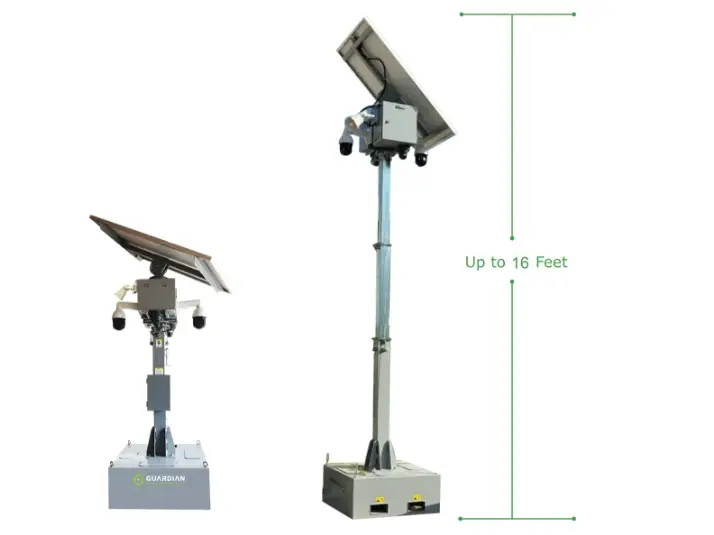
Solar-powered, rapid-deploy units for SJ drive-up rows, RV lots and expansion phases.

Licensed guards for SJ storage offices, auction days and staffed-lobby hours.

Marked vehicle patrol across your SJ storage lots, perimeters and vehicle rows.

What We Watch
Every Gate, Aisle and Corridor: What Guardian Watches at a San Jose Storage Facility
Guardian’s storage facility monitoring puts trained human agents on your property’s camera feeds in real time — gates, drive aisles, hallways, elevator lobbies, the perimeter fence and the office door — watching for break-ins, tailgating and after-hours trespass instead of leaving footage for review after a tenant reports a cut lock.
AI flags activity on camera in under a second. A live agent verifies what triggered it and, if it is a real intrusion, speaks to the person through on-site speakers before a unit door comes open, then alerts and coordinates with law enforcement and sends you a documented incident report.
The economics are why most operators switch: on-site guards run $25–30 per hour, while live video monitoring runs under $3 per hour — roughly 70% less for continuous coverage of every aisle rather than one office window.

Our Operations Center
After the Gate Locks: How Our California Operations Center Covers San Jose Storage Facilities Overnight
San José’s self-storage properties run on the same math as any other unstaffed site: gate hours outlast office hours by a wide margin, whether that’s an Alum Rock Avenue drive-up row or a downtown multi-story building with its front office locked for the night. Nobody from the property is there once that happens — a trained Guardian agent is, watching every San Jose facility’s live camera feed instead of a saved clip pulled after a tenant already found something wrong. AI flags the activity in under a second; the agent confirms it on camera and speaks to the person over the site speakers before a unit door opens.
San Jose’s own rules point at the same gap. The city issues no alarm permit at all, and under San José Municipal Code § 10.42.130 it is the responsible party — not the city — who must keep police from being called out to a false alarm; if San Jose police are called, § 10.42.160 requires reaching the premises within 45 minutes and granting access for a search, and § 10.42.170 bars a direct-dial connection straight to 9-1-1. A separate part of the code reaches further: under § 17.72.505, any building or structure is declared “unsecured” — and therefore a public nuisance the city can act on — when unauthorized persons can readily gain entry to it without the owner’s consent, whether or not anyone is watching. Left unaddressed, the city’s own code enforcement process can restrict the property from use, do the work of securing it, and bill the owner for the cost, with an unpaid invoice becoming a lien on the property. Our San Jose team’s agent, already watching the camera, is what keeps a gate failure from ever reaching that point — verifying what’s on-site before any call goes out, delivering the on-site warning, alerting San Jose police with a description while the person is still there, and sending Guardian’s own licensed patrol when an on-site presence is needed.
Our Process
How a Guardian Trailer Deployment Works, Step by Step
a simple, proven process that keeps your business protected 24/7,
Assess
We walk the property with you — perimeter, lighting, blind spots, and the access points that matter after hours.
Install
NDAA-compliant cameras and on-site speakers, installed by Guardian’s licensed California technicians. Fast deployment for active job sites.
Verify
Our agents watch the feeds live. AI flags activity in under a second; a human confirms what it is.
Respond
Two-way audio warning on the spot, law enforcement alerted with verified detail, and a written incident report to you.
Property Types
Where San Jose Stores Its Belongings: East Side Rows, South San Jose Corridors and Downtown Infill
an Jose self-storage does not come in one shape. East San Jose’s Alum Rock Avenue and King Road corridor carries the classic drive-up facility — rows of roll-up doors behind a coded gate, block after block of it. South San Jose’s Blossom Hill Road, Winfield Boulevard and Tully Road corridor is dense with competing climate-controlled operators, several stacked within blocks of each other along the same arterial. Closer to downtown, multi-story, climate-controlled buildings add a different risk entirely, where it moves indoors to hallways, elevator lobbies and loading bays instead of an open row.
Guardian covers all of it — fixed cameras and speakers for a multi-story building with defined entries and corridors, solar-powered surveillance trailers for a drive-up row, a vehicle lot or an expansion phase that needs coverage this week — across Santa Clara County, including Santa Clara, Campbell and Milpitas.
Drive-Up Rows & Vehicle Lots
Why a Gate Code Is Not a Security Plan for a San Jose Storage Facility
Every entry on a coded gate’s log looks identical: a valid code came in. The log cannot say whether it was the tenant, a former tenant who never lost the code, or someone who followed a car through before the gate closed — the person entering isn’t the one the burglary calltype on San Jose’s own call records is built to catch after the fact. On Alum Rock Avenue or King Road, that failure plays out along an open drive-up row, dim between the wall-pack lights and out of sight of the office. On Blossom Hill or Winfield, it’s a lot shared with several competing operators, where a wrong turn off the arterial looks the same as a rightful one. Inside a downtown multi-story building, the gate stops mattering the moment someone is past the lobby door, and the risk becomes a hallway or an elevator with no camera watching either. Guardian builds around what the property actually is: cameras and speakers fixed to the buildings, and a solar-powered trailer at the end of any row too long for fixed coverage, so the aisle and the gate read as one picture on the agent’s screen.
Someone idling by a row, or on foot between unit doors after hours, is what the agent is watching for. A live warning goes out before a lock is touched; if the person stays, San Jose police get a verified description while it is still happening on the property. What comes out of it is a written incident report — the kind of record an operator can hand to a tenant with a claim, or to the insurer’s adjuster, without promising either one an outcome.
San Jose Clients
Trusted by California Businesses for Two Decades
“Our liquor store had few break ins recently but since they deployed their security unit we feel very secure and have peace of mind now! They constantly dispatch warnings to suspicious trespassers!”
— Nabil Tadlaoui, Google Review
Nabil Tadlaoui Google Review
San Jose Data
San Jose Police Logged 3,920 Burglary Calls in 2025 — Only 5.2% Ended in an Arrest
San Jose’s calls-for-service file carries no field that isolates a storage facility from any other property, so this figure is citywide: SJPD logged 3,920 calls coded as a burglary (calltypes 459, 459R and BURG) in calendar-year 2025. Of those, 3,084 — 78.7% — resulted in a police report; 202 — 5.2% — closed with an arrest or a citation.
The calls skew toward business hours, not the overnight window: 2,438 — 62.2% — were logged between 6 a.m. and 6 p.m., against 1,482 — 37.8% — overnight. Wednesday was the busiest day of the week (653 calls) and 9 a.m. the single busiest hour (292). Most calls — 2,334, or 59.5% — were logged at the department’s routine priority level (Priority 3); 999, or 25.5%, at its most urgent priority level (Priority 1). None of this tells an operator whether any call happened at a storage facility — only that a burglary call in San Jose, wherever it happens, rarely ends in an arrest.
Source: City of San Jose Open Data, Police Calls for Service (2025 file, 262,095 records). Calendar-year 2025 calls where CALLTYPE_CODE = 459, 459R or BURG; report-taken = FINAL_DISPO_CODE R or O; arrest/citation = FINAL_DISPO_CODE A, B or C; hour and weekday from OFFENSE_TIME/OFFENSE_DATE; queried 3 September 2026. Call records, not confirmed offenses; the dataset carries no premise-type field.
See the citywide data: San Jose Burglary Statistics
FAQ
Questions San Jose Storage Operators Ask Guardian
Does California's Self-Service Storage Facility Act require a San Jose storage operator to provide security?
No. The Act — Business and Professions Code §§ 21700–21716 — governs the rental agreement, the owner’s lien and the lien sale: it defines a facility as space occupants “are to have access to,” gives the owner a lien on stored property, and sets the enforcement sequence: after 14 consecutive days of unpaid rent the owner may send a termination notice setting a date at least 14 days out, and only if the sum is still unpaid on that date may the owner deny access, enter the space and remove the contents. No section requires cameras, lighting, alarms or guards. What protects a paying tenant’s unit is whatever the operator puts on the property.
How many burglary calls does San Jose police handle in a year, and how often do they lead to an arrest?
Thousands, and rarely. SJPD logged 3,920 calls coded as a burglary citywide in 2025 (calltypes 459, 459R and BURG) — 3,084 of them, 78.7%, produced a police report, but only 202, or 5.2%, ended in an arrest or citation. The city’s calls-for-service file has no field that isolates a storage facility from any other property, so this count is citywide, not storage-specific — the relevance to an operator is what the low arrest rate means: without a live witness, a burglary call is a record after the fact, not an outcome. Live monitoring changes that by putting an agent on the camera while it’s happening, with a verified description for San Jose police before the person leaves.
Can Guardian cover a drive-up facility on the East Side and a climate-controlled facility in South San Jose?
Yes — both, with different designs. For a drive-up facility along Alum Rock Avenue or King Road, Guardian pairs fixed cameras on the buildings with a solar-powered surveillance trailer at the end of the longest row, so gate, aisles and fence line are watched together. A South San Jose facility on Blossom Hill Road or Winfield Boulevard, sharing a corridor with several competing operators, gets fixed cameras and speakers covering the property line as well as the buildings; a multi-story, climate-controlled building closer to downtown gets the same fixed-camera design turned inward, on hallways, elevator lobbies and the loading bay instead of an open row.
Can San Jose's code enforcement actually secure an unsecured storage facility and bill the operator?
Yes, under San José Municipal Code § 17.72.505: a building or structure is legally “unsecured” — and a public nuisance the city can act on — whenever unauthorized persons can readily gain entry without the owner’s consent, which describes a storage facility with a broken gate or a propped-open access door as much as any other building. If the operator doesn’t fix it, the city’s own abatement process (SJMC §§ 17.02.070, 17.02.300–17.02.360) lets code enforcement do the securing itself, invoice the owner for the cost, and — if that invoice goes unpaid for 30 days — record the debt as a lien against the property. It runs through a notice-and-hearing process, not a same-day response, which is exactly why catching a broken gate before code enforcement does is worth more to an operator than after.
Let's Connect
Put Live Eyes on Every Aisle of Your San Jose Storage Facility
Free site assessment, no obligation. Tell us what you need covered and we will scope it.
Reviewed by the Guardian Integrated Security editorial team · CA PPO #121089 · Last updated 10 September 2026