
Serving Fremont County
Self Storage Security in Fremont
A punched-in gate code looks identical whether the tenant is the one holding it or a stranger who watched them type it. Guardian puts trained agents on Fremont self-storage properties around the clock, catching an intrusion in the corridor while it is happening instead of leaving a cut lock for someone to discover days later, and handing Fremont Police a real description, not a guess.
NDAA-Compliant Equipment
BBB A+ Rated
CA PPO #121089 · ACO #7501
2,700+ California Businesses Protected
20+ Years in Business
The Challenge
California Gives a Fremont Storage Operator a Lien, Not a Lock
Self storage security in Fremont is an occupancy problem before it is a building problem: one break-in costs the operator the tenant who leaves, the claim nobody budgeted for, and the review every future prospect reads.
The law does not fill that gap. The California Self-Service Storage Facility Act defines a facility as property rented to occupants who “are to have access to the space,” gives the owner a lien on everything stored, and sets out how that lien is enforced: once rent is 14 consecutive days late the owner may send a termination notice, and only after the date that notice specifies — which must be at least 14 days after it is mailed — does the lien attach and the owner may deny access, enter the space and remove the contents. It says nothing about cameras, lighting, gates or guards; what protects a paying tenant’s unit is whatever the operator puts on the property.
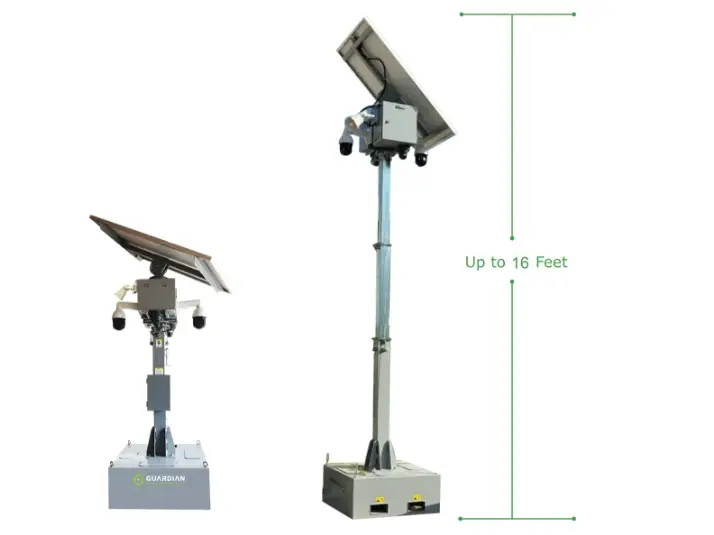
Fremont’s own zoning code comes closer, but stops short. Municipal Code § 18.190.330 sets development standards specific to what the code still calls a “mini-warehouse” facility, and two of them are security-adjacent: every facility must include a caretaker quarters, and site lighting must be shielded from neighboring property while allowed enough intensity “to discourage criminal activity.” A caretaker keeps set hours and cannot watch every unit door at once; a floodlight only deters what a passerby can see it doing. California DOJ data recorded 114 offenses in the City of Fremont in 2025 coded “Theft From Building” — 4.7% of the city’s 2,422 larceny-theft offenses that year. Live video monitoring puts a trained agent on the gate, the aisles and the corridors while it is happening — a spoken warning before a lock is cut, a verified description to law enforcement if the person keeps coming. Drive-up rows and vehicle lots without fixed power get the same coverage from rapid-deploy surveillance trailers.
“If the notice has been sent as required by Section 21703 and the total sum due has not been paid by the termination date specified in the preliminary lien notice, the lien imposed by this chapter attaches as of that
date and the owner may do all of the following: (1) Deny an occupant access to the space. (2) Enter the
space. (3) Remove any property found therein to a place of safekeeping.”
— California Business and Professions Code § 21705(a), Self-Service Storage Facility Act
Access Is Denied by Notice, Not on Day 14
Under B&P Code §§ 21703–21705 access ends only after a mailed termination notice runs at least 14 more days unpaid — the Act's only access rule.
No Security Standard in the Act
Sections 21700–21716 cover the lien, the notices and the sale. None requires cameras, lighting, alarms or guards.
Fremont Zoning Requires a Caretaker, Not Cameras
Fremont Municipal Code § 18.190.330 requires every self-storage facility to include a caretaker quarters and shielded, deterrent-level lighting — no camera, alarm or guard requirement.
114 "Theft From Building" Offenses in 2025
California DOJ data recorded 114 such offenses citywide in Fremont in 2025 — 4.7% of the city's 2,422 larceny-theft offenses that year.
More in Fremont
All Guardian Services in Fremont

24/7 live agent monitoring for Fremont self-storage gates, drive aisles and unit corridors.

NDAA-compliant camera systems for gates, elevator lobbies, hallways and drive-up rows.

Solar-powered, rapid-deploy units for Fremont drive-up rows, RV lots and expansion phases.

Licensed guards for Fremont storage offices, auction days and staffed-lobby hours.

Marked vehicle patrol across your Fremont storage lots, perimeters and vehicle rows.

What We Watch
Every Gate, Aisle and Corridor: What Guardian Watches at a Fremont Storage Facility
Guardian’s storage facility monitoring puts trained human agents on your property’s camera feeds in real time — gates, drive aisles, hallways, elevator lobbies, the perimeter fence and the office door — watching for break-ins, tailgating and after-hours trespass instead of leaving footage for review after a tenant reports a cut lock.
AI flags activity on camera in under a second. A live agent verifies what triggered it and, if it is a real intrusion, speaks to the person through on-site speakers before a unit door comes open, then alerts and coordinates with law enforcement and sends you a documented incident report.
The economics are why most operators switch: on-site guards run $25–30 per hour, while live video monitoring runs under $3 per hour — roughly 70% less for continuous coverage of every aisle rather than one office window.

Our Operations Center
After the Gate Locks: How Our California Operations Center Covers Fremont Storage Facilities Overnight
Peralta, Stevenson and Grimmer near I-880, or a unit off Mowry Avenue near Centerville — wherever the property sits, Fremont’s self-storage gates keep taking codes long past the hour any office on-site has closed. What happens after that is unwatched by anyone Fremont employs there. Guardian’s California operations center covers that stretch for every Fremont facility it protects, with a trained agent live on the camera feed — watching the aisle and corridor as it happens, not reviewing a clip after a tenant already noticed something wrong. AI flags the activity in under a second; the agent confirms it on camera and speaks to the person over the site speakers before a unit door opens.
That live view answers a gap Fremont’s own zoning code leaves open. Municipal Code § 18.190.330 requires every self-storage facility — a “mini-warehouse,” in the code’s own term — to include a caretaker quarters and to light the property enough “to discourage criminal activity,” while shielding that light from neighboring parcels. Both requirements assume something is watching; neither one is built to cover every hour or every aisle at once. A caretaker keeps ordinary hours and cannot see every unit door simultaneously; a floodlight only deters what a person can see it illuminating. An agent already watching the camera closes that gap around the clock — alerting Fremont Police with a live description and the exact location, sending Guardian’s own licensed patrol when an on-site presence is needed, and giving the operator continuous coverage the caretaker requirement alone was never designed to provide.
Our Process
How a Guardian Trailer Deployment Works, Step by Step
a simple, proven process that keeps your business protected 24/7,
Assess
We walk the property with you — perimeter, lighting, blind spots, and the access points that matter after hours.
Install
NDAA-compliant cameras and on-site speakers, installed by Guardian’s licensed California technicians. Fast deployment for active job sites.
Verify
Our agents watch the feeds live. AI flags activity in under a second; a human confirms what it is.
Respond
Two-way audio warning on the spot, law enforcement alerted with verified detail, and a written incident report to you.
Property Types
Where Fremont Stores Its Belongings: The Peralta-Stevenson Corridor and Mowry Avenue
Fremont’s self-storage supply sits mostly in the middle of the city rather than at either end. Along the Peralta Boulevard, Stevenson Boulevard and Grimmer Boulevard corridor near Interstate 880, drive-up and multi-story storage buildings sit among light-industrial and auto-service properties — long rows of roll-up doors behind a single coded gate. Mowry Avenue, closer to the Centerville district, carries a second cluster of drive-up and indoor facilities along a busy retail corridor. Both areas put a storage building next to businesses that close at a fixed hour, leaving the storage site as one of the few properties on the block still holding value after dark.
Guardian covers all of it — fixed cameras and speakers for a multi-story building with defined entries and corridors, solar-powered surveillance trailers for a drive-up row, a vehicle lot or an expansion phase that needs coverage this week — across Fremont and the wider Tri-City area, including Newark and Union City.
Drive-Up Rows & Vehicle Lots
Why a Gate Code Is Not a Security Plan for a Fremont Storage Facility
Fremont’s zoning code sets real standards for a self-storage site — a masonry wall where a property backs onto a residential lot, lighting shielded from the neighbors but bright enough to discourage trouble, a caretaker quarters somewhere on the parcel — and none of it is built to catch what happens between the caretaker’s rounds. Along the Peralta-Stevenson-Grimmer corridor, storage buildings sit next to auto shops and light-industrial tenants that lock their own doors by six; on Mowry Avenue, a drive-up row runs behind the same gate code every renter already has memorized. Guardian designs around the gap those standards leave: fixed cameras and speakers on a multi-story building’s corridors and entries, a solar-powered trailer set at the end of a drive-up row where running power to a fixed camera would mean trenching the whole lot.
What an agent is actually watching for doesn’t change with the address: a vehicle that parks and idles instead of pulling straight up to a numbered door, or a person working down a row checking locks instead of walking to just one. Either draws a live warning over the speaker before a bolt cutter comes out, and if the person doesn’t leave, Fremont Police get a description and a location while it is still happening — not a claim form filled out after a renter finds the damage on a later visit.
Fremont Clients
Trusted by California Businesses for Two Decades
“Our liquor store had few break ins recently but since they deployed their security unit we feel very secure and have peace of mind now! They constantly dispatch warnings to suspicious trespassers!”
— Nabil Tadlaoui, Google Review
Nabil Tadlaoui Google Review
Fremont Data
California DOJ Data Recorded 114 "Theft From Building" Offenses in Fremont in 2025
California’s Department of Justice tracks a larceny-theft category called “Theft From Building” — a theft where the loss happens inside a structure, as distinct from a theft off a vehicle, a shoplift, or a pick-pocketed wallet. In 2025, Fremont Police Department reported 114 such offenses to the state, out of 2,422 total larceny-theft offenses recorded for the city that year — 4.7% of the total. The prior year’s count was 164.
Fremont’s crime data carries no field that ties an offense to a storage facility specifically, so these figures are citywide, not a storage-premise count. The pattern is still the relevant one for an operator: a theft “from a building” means the offender was inside a structure the public doesn’t routinely pass through, for as long as it took to search it — the same exposure an unwatched storage corridor creates after the caretaker’s hours end.
Source: California Department of Justice, Crimes and Clearances with Arson 1985–2025 (July 2026 release). Figures are agency-reported (Fremont Police Department) counts for the City of Fremont, calendar year 2025, category “Larceny: From Building”; queried 3 September 2026. The dataset carries no premise-type field, so these are citywide counts, not filtered to a storage-facility subset. The file is a static annual release, so a later release may report different totals.
See the citywide data: Fremont Commercial Burglary Statistics
FAQ
Questions Fremont Storage Operators Ask Guardian
Does California's Self-Service Storage Facility Act require a Fremont storage operator to provide security?
No. The Act — Business and Professions Code §§ 21700–21716 — governs the rental agreement, the owner’s lien and the lien sale: it defines a facility as space occupants “are to have access to,” gives the owner a lien on stored property, and sets the enforcement sequence: after 14 consecutive days of unpaid rent the owner may send a termination notice setting a date at least 14 days out, and only if the sum is still unpaid on that date may the owner deny access, enter the space and remove the contents. No section requires cameras, lighting, alarms or guards. Fremont’s own zoning code comes closer, from a different angle: Municipal Code § 18.190.330 requires every self-storage facility to include a caretaker quarters and lighting shielded from neighbors but bright enough to discourage crime — real standards, but a zoning requirement, not a security mandate.
What kind of property crime does Fremont report that's relevant to a storage facility operator?
California DOJ data recorded 114 offenses in Fremont in 2025 coded “Theft From Building” — a theft where the loss happens inside a structure rather than from a vehicle or a person — out of 2,422 total larceny-theft offenses that year, 4.7% of the total. Fremont’s data carries no field that ties an offense to a storage facility specifically, so this is a citywide count, not a storage-premise figure. The pattern is still the relevant one: it’s a theft that took time, inside a structure the public doesn’t routinely pass through — exactly the exposure an unwatched storage corridor creates.
Can Guardian cover a drive-up facility near Peralta Boulevard and a multi-story building on Mowry Avenue?
Yes — both, with different designs. Along the Peralta Boulevard, Stevenson Boulevard and Grimmer Boulevard corridor near Interstate 880, Guardian pairs fixed cameras on the buildings with a solar-powered surveillance trailer at the end of the longest drive-up row, so the gate, the aisles and the fence line are watched together. On Mowry Avenue near Centerville, a multi-story or mixed drive-up facility gets fixed cameras and speakers on the corridors, elevator lobbies and entries instead — no trenching needed where power already runs to the building.
Does Fremont's zoning code require anything more than a caretaker at a self-storage facility?
It requires a caretaker quarters and specific lighting — but nothing beyond that. Fremont Municipal Code § 18.190.330 sets development standards for what the code calls a “mini-warehouse”: a six-foot masonry wall where the property backs onto residential land, storage limited to enclosed buildings, a caretaker quarters on every site, and lighting shielded from neighboring property while allowed enough intensity “to discourage criminal activity.” No section requires a camera, an alarm system or a guard. A caretaker keeps set hours and a floodlight only deters what someone can see it doing — Guardian’s live monitoring is built to cover the hours and the corners neither one reaches.
Let's Connect
Put Live Eyes on Every Aisle of Your Fremont Storage Facility
Free site assessment, no obligation. Tell us what you need covered and we will scope it.
Reviewed by the Guardian Integrated Security editorial team · CA PPO #121089 · Last updated 10 September 2026