Thanksgiving, winter shutdowns and long weekends all leave commercial buildings, yards and job sites empty for days. Empty sites get attention from the wrong people. This holiday closure security checklist shows Bay Area property owners and managers how to get ready before the doors close.
Why holiday closures raise risk
When a site sits unattended for several days, nobody is around to notice something wrong. A broken lock, a cut fence or a vehicle idling in the lot can go unseen until the first person returns. Trespassers, scrap thieves and opportunists tend to treat closed sites as easy targets. The longer the closure, the more time they have.
The Bay Area’s own numbers show why the winter break deserves a plan. Oakland Police Department data shows that December 2025 was the city’s heaviest month for commercial burglary, with 102 cases, even in a year when the citywide total fell to 1,008. Our Oakland commercial burglary statistics page has the full breakdown. Mild Bay Area weather also means construction and yard work often continue right up to the shutdown. That leaves equipment and materials on site just as the crews leave.
Your holiday closure security checklist
1. Walk the perimeter
Check fences, gates, padlocks, loading dock doors and roll-up doors. Repair damaged fencing and replace weak locks before you leave. Trim back vegetation that blocks sight lines to doors and windows.
2. Light the property properly
Burnt-out bulbs and dark corners give intruders cover. Test every exterior light, including lot, dock and entrance fixtures, and fix any that are out. Good lighting also helps your cameras capture usable video at night.
3. Remove temptation
Move high-value tools, materials and equipment indoors or into locked storage. On construction sites, secure copper, vehicles and fuel. Take valuables out of sight lines from the street.
4. Test your cameras
Confirm that every camera is recording, aimed correctly and not blocked. Check storage space and network connections. A camera that is down on day one of a holiday closure protects nothing. If a camera needs service, see our CCTV repair team.
5. Decide who watches the site
Recorded video helps you review what happened. It does not stop an incident while it is happening. For a closure of several days, you need someone actively watching and ready to act. The options are below.
6. Update alarm codes, key-holders and your call list
Set the intrusion alarm and change any codes shared with departing staff or contractors. Confirm that at least two key-holders can be reached during the closure, and send your monitoring provider the current names and phone numbers. Also note your closure dates and check with your insurer whether an extended vacancy affects your coverage.
Your options for watching an empty site
Live video monitoring
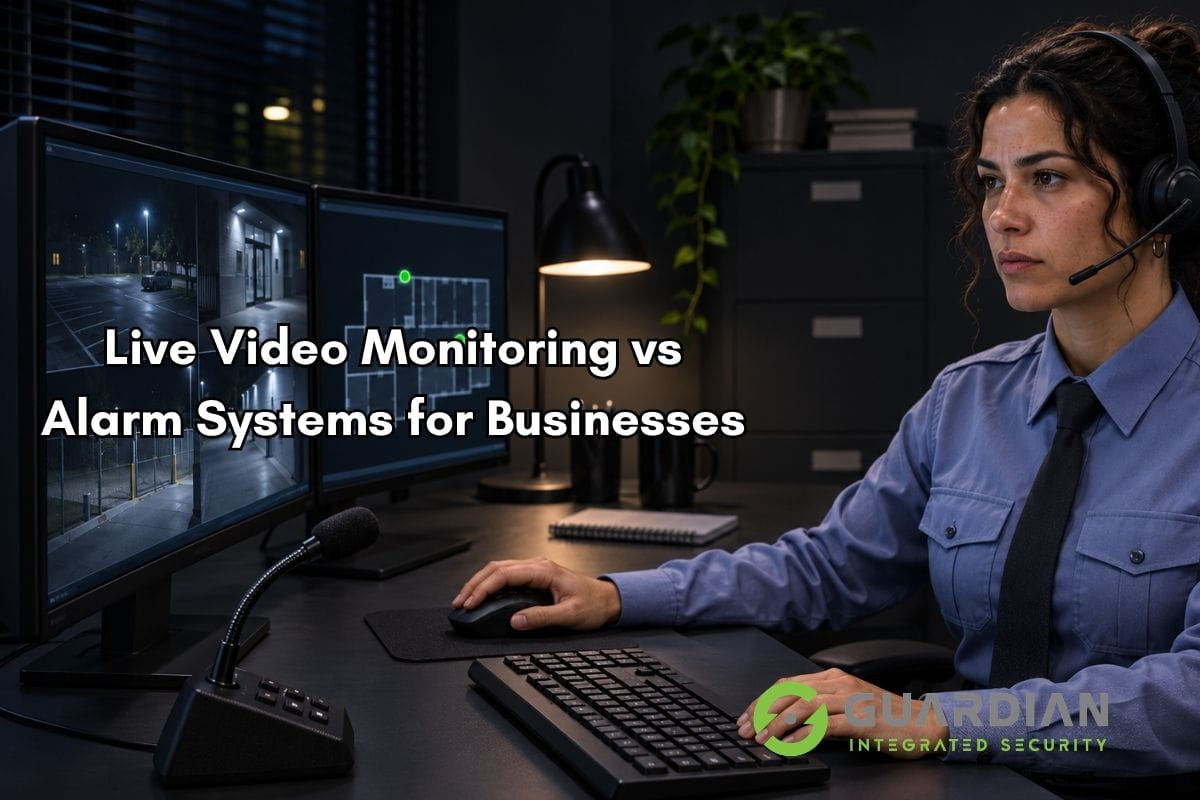
With live video monitoring, live operators watch your cameras in real time. On cameras fitted with speakers, the operator can talk down a trespasser over two-way audio and, if the warning is ignored, alert the police with a live description. Pricing for live video monitoring is under $3 per hour, which makes it a practical way to cover a long closure. For a closer look at how it works, read what is remote video monitoring.
Mobile surveillance trailers
If your site has no cameras, or the existing ones don’t cover the whole property, a mobile surveillance trailer can be placed where you need coverage and paired with live monitoring. Trailer pricing: Contact for quote. They suit job sites, yards, vacant lots and temporary closures.
Guard services
For sites that need a person on the property, our security guard services are available at $30 to $40 per hour. Many owners pair a guard for part of the closure with camera monitoring for the rest. Learn more about that approach in our hybrid security guard service guide, or compare the options in guard vs remote monitoring.
Sites that need extra attention
- Construction sites: materials and equipment are exposed and fencing is often temporary. See our construction site security tips.
- Warehouses and distribution centers: closed docks and full trailers invite cargo theft. See warehouse security in California.
- Car dealerships: lots full of inventory are an easy target after closing. See car dealership security.
- Vacant buildings: empty properties can attract squatters. See vacant property security.
Who to call, and when
- One week before: book fence, lock and lighting repairs with your contractors, and ask your monitoring or guard provider to confirm the closure schedule.
- Three days before: send your monitoring provider the updated key-holder list and tell your insurer the closure dates. Ask your property manager or neighbouring tenants to report anything unusual.
- Closing day: set the alarm and confirm with your provider that monitoring is active. Keep your provider’s number and your key-holders’ numbers somewhere easy to find.
- During the closure: if an operator or key-holder reports a problem, call local police first, then your insurer. Photograph any damage before anyone cleans up.
- Reopening: walk the property before staff arrive, and ask your provider for the incident log covering the closure.
Get your site covered before the break
Guardian Integrated Security protects commercial properties across the Bay Area and California with live video monitoring, mobile surveillance trailers and guard services. We hold PPO 121089 and CSLB 976737. If you have an Oakland site, see our security services in Oakland. Request a quote to set up coverage before your next closure.