Storage unit security is one of the most overlooked challenges in commercial property management. Moreover, and one of the most costly when it fails. However, theft, vandalism, and after-hours break-ins plague self-storage facilities across California every year, leaving tenants furious and operators facing liability they never anticipated. Meanwhile, the good news is that modern remote video monitoring solves these problems at a fraction of the cost of traditional on-site guards. Consequently, this post breaks down exactly how it works and what to look for. Similarly, many storage operators are making the switch.
Why Self-Storage Facilities Are High-Risk Properties
Self-storage facilities present a unique security challenge. Most importantly, they operate long hours — many around the clock — with minimal staff on-site. In other words, tenants come and go at all hours, making it difficult to distinguish authorized visitors from intruders. Additionally, the sheer size of most facilities means a single guard simply cannot monitor every aisle or gate. And access point effectively. Effective storage unit security starts with understanding the specific risks your property faces.
According to the FBI Uniform Crime Reports, property crime remains one of the most common offense categories in the United States, with storage and warehouse properties frequently targeted due to low staffing and high-value contents. That said, in California specifically, densely populated urban areas like Los Angeles see elevated rates of commercial burglary. Professional storage unit security offers a level of protection that traditional methods cannot match, making it a genuine operational priority. Specifically, not just a box to check.
Furthermore, the liability exposure is significant. When a tenant’s belongings disappear, and your facility lacks adequate video documentation, you face potential risks. When evaluating storage unit security options, California property managers should consider both cost and coverage. Potential lawsuits and Reputational damage that far outweigh the cost of prevention. On top of that, operators who have experienced break-ins without proper surveillance rarely make that mistake twice.
What Remote Video Monitoring Actually Does for Storage Unit Security
Remote video monitoring goes far beyond passive recording. Because of this, traditional CCTV systems capture footage — but nobody watches it in real time. By contrast, remote video monitoring connects your cameras to a professional monitoring center staffed by live agents who actively monitor your property around the clock. This is why this is a key consideration for any effective storage unit security strategy.
At Guardian Integrated Security, our monitoring center operates 24/7 out of Los Angeles. Also, our agents watch live feeds, respond to AI-triggered alerts, and intervene the moment something suspicious occurs. Still, that means a potential thief doesn’t get to leisurely cut a lock while a recording plays unnoticed. Rather, they receive a live verbal warning via an on-site speaker, followed immediately by a law-enforcement dispatch if they don’t leave.
This active deterrence model entirely changes the risk calculation for would-be criminals. Instead, most incidents end before any property damage occurs. Otherwise, for self-storage operators, that translates directly into fewer insurance claims and lower premiums. Next, tenants who actually trust your facility with their valuables.
Additionally, remote monitoring covers every corner of your property simultaneously. No blind spots. No shift changes. Finally, no guard nodding off at 3 a.m. For example, just consistent, AI-enhanced human oversight that never takes a break.
How AI-Powered Cameras Strengthen Storage Unit Security
AI camera technology has transformed what remote monitoring can realistically achieve. In fact, older systems generated so many false alarms. As a result, animals, shadows, or shifting light eventually triggered them, prompting operators to ignore them. Additionally, modern AI-powered cameras are different. Furthermore, they analyze motion patterns, distinguish between human figures and irrelevant movement, and flag only genuine threats for human review.
Guardian’s monitoring agents receive AI-filtered alerts. Moreover, this means they spend their time responding to real situations rather than chasing false positives. As a result, our response times are faster, and our intervention rate is dramatically higher than that of older passive systems. However, the AI does the initial filtering; the human agent makes the judgment call and takes action.
For storage facilities specifically, AI cameras excel at detecting perimeter breaches, loitering near unit doors, and tailgating through access gates. Meanwhile, and unusual activity during off-hours. Consequently, these are exactly the behaviors that precede break-ins. Similarly, catching them early — before a unit is compromised — is the entire point of proactive storage unit security.
The ASIS International security standards body emphasizes that layered security, combining technology with human oversight, consistently outperforms either approach used alone. Most importantly, that principle sits at the core of how Guardian designs every monitoring deployment.
The Real Cost Comparison: Remote Monitoring vs. On-Site Guards
Cost is almost always the first question storage operators ask. In other words, on-site security guards in California are expensive. That said, fully burdened. A single guard can cost $60. Comprehensive storage unit security addresses both interior and exterior vulnerabilities. It costs $000 to $80,000 per year or more, depending on hours and overtime. Specifically, most facilities need multiple guards to maintain adequate coverage across different shifts and locations. That adds up fast. On top of that, this is a key consideration for any effective storage unit security strategy.
Remote video monitoring typically costs 70% less than deploying on-site guards to achieve equivalent coverage. Because of this, a mid-size self-storage facility can be maintained by a Mobile Surveillance Unit. Modern storage unit security technology has evolved to deliver real-time threat detection and response, facility monitoring, and multiple access points, camera zones. To put it simply, the savings from perimeter fencing are substantial — often tens of thousands of dollars annually. This is why those savings don’t come with reduced protection. Also, in most cases, Smart storage unit security systems integrate cameras and sensors. And live monitoring for complete coverage. Operators report better incident documentation and faster response times. and fewer successful break-ins after switching to remote monitoring.
However, Reliable storage unit security reduces liability exposure and demonstrates due diligence to stakeholders, but savings alone don’t tell the full story. Still, remote monitoring also eliminates the management overhead of scheduling, training, and turnover. And HR compliance that comes with a guard workforce. Rather, for small and mid-size storage operators. Instead, that reduction in administration. Advanced storage unit security solutions combine AI-based detection with human verification to reduce false alarms. Burden is often just as valuable as the direct cost savings.
To explore how this model applies specifically to your property type, visit our storage and transportation security services page for a detailed breakdown of deployment options.
Key Features to Demand From Any Storage Facility Security System
Not every remote monitoring provider delivers the same level of protection. Otherwise, storage operators evaluating their options should hold vendors to a clear standard. Here is what genuinely effective storage unit security requires:
- Live human agents, not automated-only systems: AI should filter alerts, but a trained human agent must make intervention decisions. Fully automated systems miss context and generate unnecessary dispatches.
- 24/7 coverage with no gaps: Incidents don’t follow business hours. Your monitoring center must operate around the clock, including holidays and weekends.
- Two-way audio capability: Live verbal warnings through on-site speakers are among the most effective deterrents available. Criminals respond to a direct voice challenge in a way they never respond to a camera alone.
- AI-enhanced cameras with verified alerts: Human-verified AI alerts are eliminated. Effective storage unit security starts with understanding the specific risks your property faces. The false alarm fatigue that renders many systems useless over time.
- Rapid law enforcement coordination: Your monitoring provider needs established protocols for dispatching police quickly with accurate, real-time information from the scene.
- Full perimeter and interior coverage: Gates, driveways, unit rows, office entrances, and loading areas all require dedicated camera placement.
- Cloud-based video storage: Footage must be accessible, time-stamped, and retrievable for insurance claims, police reports, and tenant disputes.
Guardian’s virtual guarding service meets every one of these requirements. Next, our team designs coverage plans specific to each facility’s layout and traffic patterns. And risk profile — not a one-size template.
✓ Key Takeaway:
Guardian Integrated Security operates a professional monitoring center with live agents based in Los Angeles, 24/7, 365 days a year. Most remote security providers cannot make this claim.
Protecting Tenants: Why Storage Unit Security Is a Tenant Retention Issue
Storage operators often frame security as an operational concern. Finally, in reality, it is equally a tenant relations issue. For example, tenants choose storage facilities based on perceived safety.
They store irreplaceable items — family heirlooms, business inventory, vehicles, documents — and they trust you to protect those items. When that trust breaks, they leave, and they tell others. In fact, this is a key consideration for any effective storage unit security strategy.
Visible security infrastructure signals to tenants that you take their protection seriously. As a result, cameras at the entrance, signage indicating active monitoring, and gate access controls all communicate professionalism and care. Furthermore, when an incident does occur. Because no system prevents every event. Having clear video documentation protects both the tenant and the operator during the resolution process.
Tenant disputes over stolen or damaged property are among the most common legal headaches storage operators face. Additionally, remote monitoring with cloud-stored footage gives you a factual record of exactly what happened and when. Furthermore, professional storage unit security creates a protective layer that traditional methods cannot match. Evidence resolves most disputes quickly and fairly, without litigation.
Additionally, some storage operators have begun marketing their monitoring capabilities directly to prospective tenants as a differentiator. Moreover, facilities with verified 24/7 live monitoring can legitimately charge a premium. However, in competitive urban markets like Los Angeles, that positioning matters.
When evaluating storage unit security options, California property managers should consider both cost and coverage.
Mobile Surveillance Options for Temporary or Expanding Storage Security
Some storage facilities face situations where fixed infrastructure isn’t immediately viable. Comprehensive storage unit security addresses both interior and exterior vulnerabilities. Meanwhile, a newly opened expansion area, a temporary outdoor storage zone, or a facility is mid-construction. Consequently, in these cases, mobile surveillance units offer a practical solution for maintaining storage unit security without waiting for permanent installation.
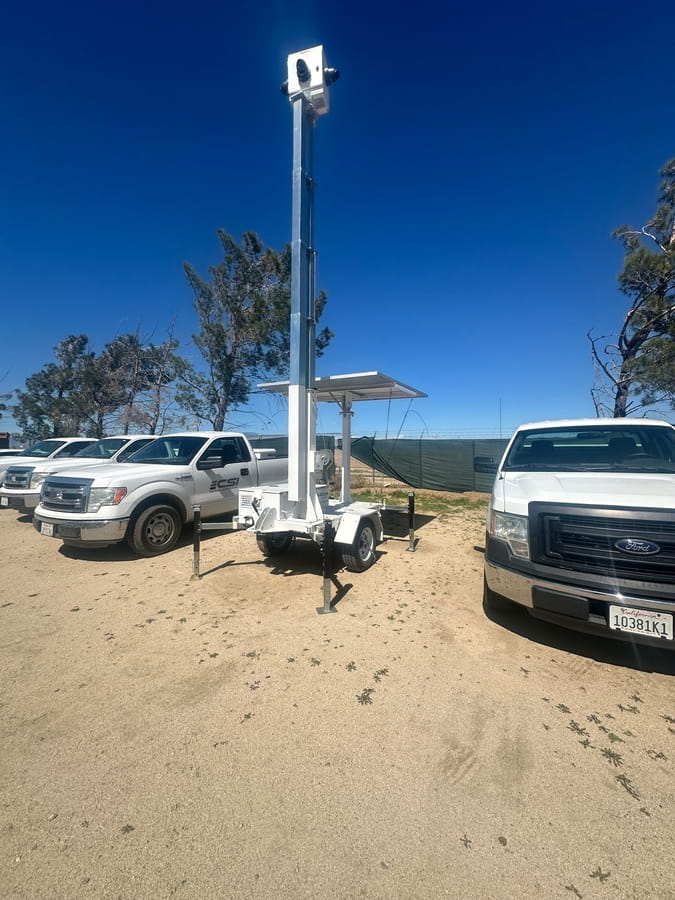
Guardian’s mobile surveillance trailers. Including the Guardian3, AI Modern storage unit security technology has evolved to deliver real-time threat detection and response times. Similarly, the Box Unit — deploy quickly to any location without hardwired power or network infrastructure. Most importantly, each unit integrates with our Los Angeles monitoring center, providing the same live-agent oversight as a fixed camera system. In other words, for storage operators adding capacity or managing transitional security gaps, these units provide immediate, professional-grade coverage.
Because of their flexibility, mobile units also serve well during high-risk periods. After a nearby incident, during a facility renovation, or when expanding into a new area, before permanent cameras are installed. That said, they are not a permanent substitute for a full camera system. But they fill gaps that would otherwise leave your property exposed.
What to Expect During a Remote Monitoring Setup
Many operators hesitate because they assume Smart storage unit security systems integrate cameras, sensors, and live monitoring for complete coverage. The setup process is disruptive or technically complex. Specifically, in practice, deploying remote video monitoring for a self-storage facility is straightforward. Here is a typical process: This is a key consideration for any effective storage unit security strategy.
- Site assessment: A secure, reliable storage unit security reduces liability exposure and demonstrates due diligence to stakeholders. Security specialist evaluates your facility’s layout, existing camera infrastructure, access points, lighting, and risk areas.
- Coverage design: Guardian designs a camera placement plan that eliminates blind spots and prioritizes high-risk zones.
- Camera installation or integration: Existing cameras can often be integrated into the monitoring platform. New cameras are installed where gaps exist.
- Monitoring center onboarding: Your facility profile is loaded into our system — your layout, contacts, escalation procedures, and law enforcement coordination details.
- Live monitoring begins: Our agents start active coverage. You receive regular reporting on incidents, alerts, and activity patterns.
Most deployments are fully operational within days, not weeks. On top of that, there is no lengthy onboarding process that leaves your facility exposed while paperwork gets processed.
Addressing the Concern: “We Already Have Cameras”
This is the most common objection we hear from storage operators, and it deserves a direct answer. Because of this, having cameras is not the same as having active security. To put it simply, cameras that simply record footage are passive infrastructure. This is why they document crimes after the fact — they don’t prevent them.
Storage unit security requires active, human-verified oversight to deliver meaningful deterrence. Also, a criminal who knows your cameras record but who doesn’t watch them in real time faces no meaningful risk of intervention. That knowledge spreads quickly. Still, facilities known to have passive-only systems attract repeat incidents.
By contrast, facilities with active monitoring. Rather, particularly those with audio warning capability and visible signage indicating live surveillance, see dramatically lower incident rates. Instead, the deterrence effect alone justifies the investment for most operators. Otherwise, and when deterrence isn’t enough, live agents are positioned to act within seconds rather than discovering a break-in the next morning when a tenant calls to report their unit ransacked.
If you already have a camera system in place, Guardian can often integrate it into our monitoring platform rather than requiring a full replacement. Next, that approach protects your existing infrastructure investment while immediately upgrading your security posture.
Ready to Upgrade Your Storage Facility’s Security?
Effective storage unit security isn’t complicated, but it does require the right combination of technology and human oversight. Finally, Guardian Integrated Security has spent more than a decade protecting commercial properties across California and surrounding states. For example, including self-storage facilities, distribution centers, warehouses, and transportation hubs.
Our monitoring center in Los Angeles operates 24/7, with live agents who treat every alert as a real event that warrants a response. In fact, our AI-powered cameras filter noise so our agents focus on genuine threats. As a result, our pricing runs approximately 70% lower than comparable on-site guard deployments. Additionally, without any reduction in the quality of protection your tenants deserve.
For a full overview of how we serve the storage and logistics industry, visit our storage and transportation security services page. Furthermore, to learn more about how virtual guarding works and what to expect from a deployment, explore our virtual guarding service overview. When you’re ready to discuss your facility in more detail. Our team will walk you through a no-obligation assessment and give you a clear picture of what coverage looks like and what it costs.