Why Shoplifting Is a Growing Problem for California Retailers
California consistently ranks among the states with the highest rates of retail theft. When it comes to shoplifting prevention. The right approach makes all the difference. Finally, organized retail crime has escalated dramatically, with groups targeting everything from grocery chains to electronics stores and luxury boutiques. Also, these are not opportunistic thieves — they operate systematically and quickly.
According to the California Department of Justice crime statistics, property crime remains one of the most reported offense categories statewide. Third, small and mid-sized retailers absorb the bulk of this impact. Next, many lack the budget for full-time loss prevention staff. Otherwise, standard CCTV cameras provide footage after the fact, not for real-time prevention. Shoplifting prevention plays a critical role in this process.
The legal landscape surrounding the detention of shoplifters has become more complex. Retailers face liability risks when employees physically intervene. That reality makes security cameras for retail shoplifting prevention even more critical. Because the goal shifts from catching criminals to deterring them before they act.
The National Retail Federation estimates that retail shrink — which includes shoplifting, employee theft. Next, administrative errors cost the industry over $112 billion annually. Shoplifting alone accounts for the largest share of that figure. For example, for California retailers operating on already-compressed margins, even a modest reduction in theft directly improves profitability.
How Live Video Monitoring Works for Retail Stores
Live video monitoring connects your store’s camera system directly to a professional monitoring center staffed by trained agents. In short, our monitoring center at Guardian Integrated Security operates 24/7 from Los Angeles. To illustrate, real agents watch your feeds in real time — not recorded clips reviewed days later.
Here is how the process works in practice:
- AI-powered cameras detect suspicious behavior — loitering near high-value merchandise, unusual movement patterns, or individuals concealing items.
- The system flags the activity and immediately alerts a live monitoring agent.
- The agent verifies the alert using live camera feeds to confirm a genuine threat — not a false alarm.
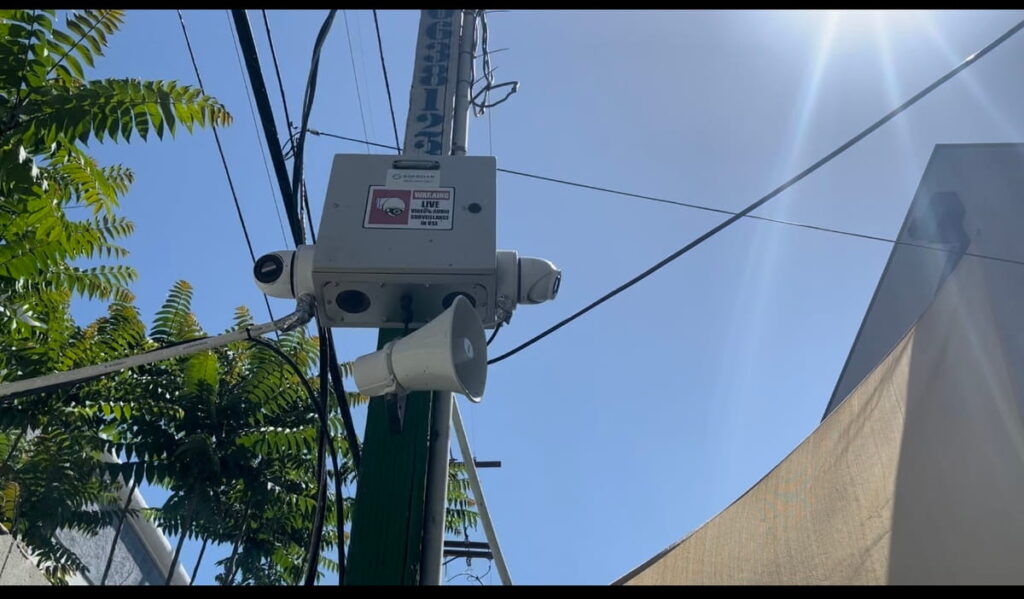
- The agent intervenes via two-way audio, issuing a verbal warning directly through the on-site speakers. Most shoplifters leave immediately.
- If needed, the agent contacts local law enforcement with a real-time description and documentation.
This combination of AI detection and human judgment eliminates the gap that standard CCTV systems leave wide open. Cameras record. Live monitoring agents act. This is why that distinction is everything when it comes to preventing shoplifting in retail stores.
Shoplifting Prevention Security Cameras: What Technology Makes the Difference
Not all security cameras are built the same. Here’s the key — standard analog cameras capture low-resolution footage that is often useless for identification. This means modern AI-powered cameras used in live monitoring systems operate at a completely different level.
Guardian’s camera systems use high-definition optics, wide-angle coverage, and intelligent analytics. To put it simply, these cameras detect behavioral anomalies — not just motion. For example, they can flag a person who has been standing near a display for an unusually long time, or identify when someone moves toward a blind spot in a store layout.
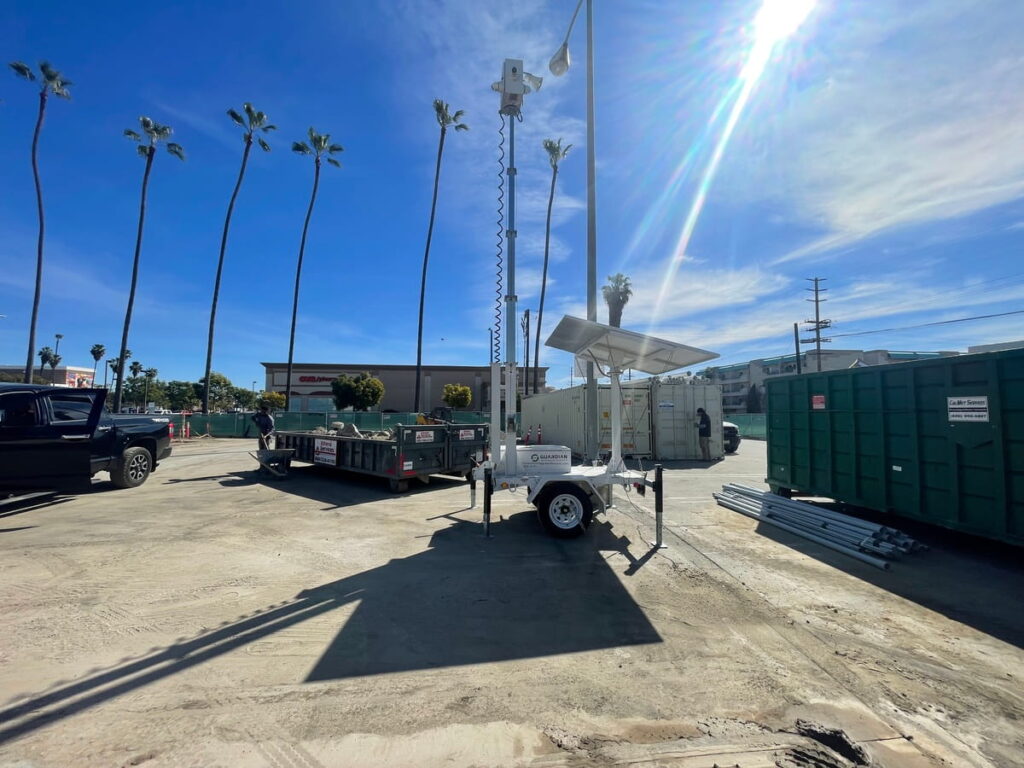
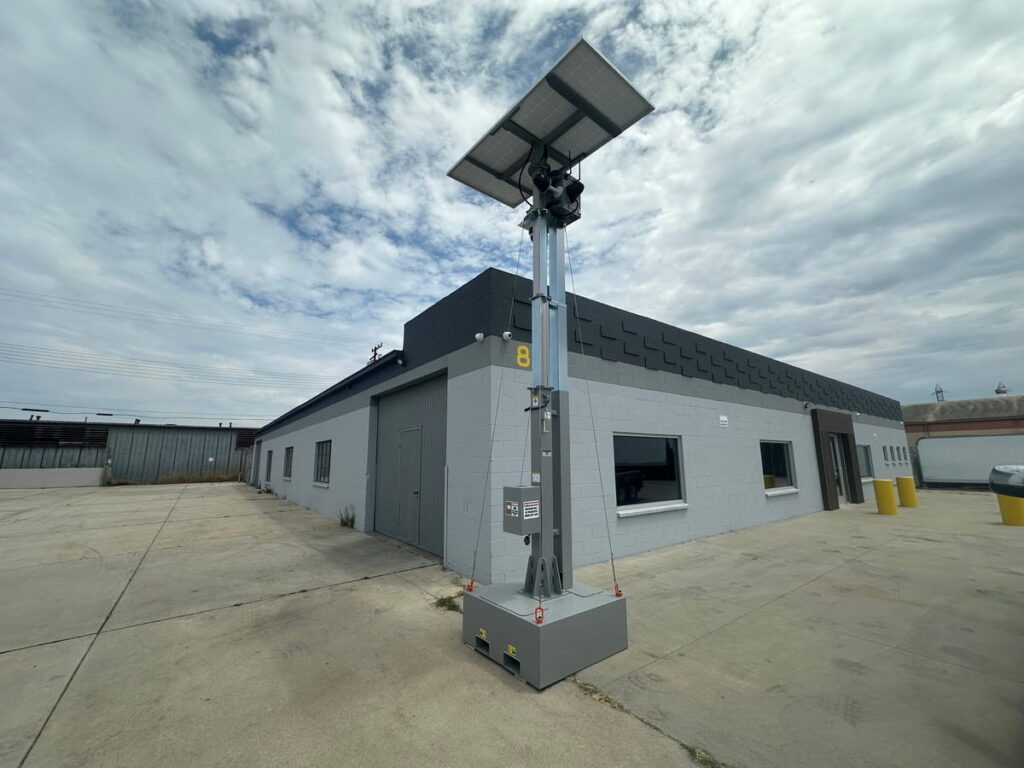
Our AiGuard unit integrates advanced video analytics with live monitoring, providing retail clients with a fully managed solution. Because of this, for stores that need flexible, rapid deployment. Such as pop-up locations or seasonal retail. Our Guardian3 surveillance trailer offers a self-contained option that requires no infrastructure installation. Shoplifting prevention security cameras play a critical role in this process.
The result is a retail shoplifting-prevention security camera setup that detects, deters, and documents all at once. This causes no more deterrence on your property and is highly recommended by all types of businesses.
Live Monitoring vs. Traditional Security Guards: A Direct Comparison
Many retailers ask the same question: why not just hire a security guard? It is a fair question. Specifically, guards provide a visible presence. However, the practical limitations are significant.
A single on-site guard can only watch one area at a time. They take breaks. They get distracted. Our shoplifting-prevention security services don’t take breaks and are always on the clock.
In contrast, a live monitoring agent watches multiple camera feeds simultaneously — covering your entire store. Additionally, on-site guards are expensive. Guardian Integrated Security’s remote monitoring solutions cost up to 70% less than deploying traditional on-site security personnel.
Consider a mid-sized retail store in Los Angeles running 12-hour operational shifts. Most importantly, a full-time uniformed guard can easily cost $8,000–$12,000 per month. In other words, live video monitoring with trained agents delivers comparable results. Often superior deterrence at a fraction of that cost.
✓ Key Takeaway:
Guardian Integrated Security operates a professional monitoring center with live agents based in Los Angeles, 24/7, 365 days a year. Most remote security providers cannot make this claim.
For retailers who want both options. Our hybrid security guard services combine on-site personnel with remote monitoring coverage, giving you maximum flexibility. Similarly, that means you get the visible deterrence of a physical presence where it matters most, plus complete coverage everywhere else.
The Specific Benefits for California Retail Store Owners
Retailers across California face a specific set of challenges that make shoplifting prevention for retail an especially strong investment. Here is what store owners consistently tell us after switching to live monitoring:
- Faster police response: Live agents provide real-time descriptions and incident documentation, significantly speeding up law enforcement response.
- Reduced employee risk: Staff no longer need to confront shoplifters directly. The monitoring agent handles the verbal intervention remotely.
- Insurance documentation: High-definition footage and incident logs help retailers file insurance claims accurately and quickly.
- After-hours protection: Most retail theft occurs during closing procedures or overnight. Live monitoring covers every hour, including the ones your staff have left for the day.
- Scalability: Whether you manage one store or a chain, our monitoring center can handle multiple sites within a single managed program.
The psychological deterrence factor should not be underestimated. Visible cameras combined with posted signage alerting potential thieves that live agents are actively monitoring have a measurable impact on theft attempts. Our retail store security services are specifically designed around this layered deterrence model.
How Guardian Deploys Shoplifting Prevention for Retail
Every retail environment is different. A single-location boutique in West Hollywood has different needs than a big-box store in the San Fernando Valley. Because of this, Guardian takes a site-specific approach rather than offering one-size-fits-all packages.
Our process starts with a free security assessment. Additionally, we evaluate your store layout, existing camera infrastructure, high-risk zones, and operational hours. Furthermore, we design a camera placement strategy from there that eliminates blind spots and ensures every high-value area receives dedicated coverage.
✓ Key Takeaway:
Guardian Integrated Security operates a professional monitoring center with live agents based in Los Angeles, 24/7, 365 days a year. Most remote security providers cannot make this claim.
For retailers with existing camera systems, our professional CCTV monitoring services can often integrate with your current setup. If your equipment needs updating, our team also provides professional CCTV installation with cameras suited to retail environments. Wide-angle, high-resolution, and AI-capable.
Our Los Angeles-based monitoring center means you get agents who understand the local environment. In fact, they are familiar with California retail conditions, local law enforcement protocols, and regional crime patterns. As a result, that local knowledge directly improves response quality.
Addressing the Most Common Concern: Will It Actually Stop Theft?
Some retailers remain skeptical. For example, they have had cameras for years, and theft still happens. So what makes live monitoring different from the CCTV system already sitting in the back office? The answer is response time and human judgment. A recorded camera system collects evidence. Instead, a live monitoring agent stops the incident as it happens. That is the fundamental difference between passive surveillance and active shoplifting prevention.
When a potential shoplifter hears a live voice say, “Our security team is watching your activity and has contacted law enforcement,” the situation changes immediately. Most individuals leave without incident. Still, that outcome protects your merchandise, avoids physical confrontation, and keeps your staff safe. Repeat offenders — a significant factor in organized retail crime — learn quickly which stores are actively monitored. They move on to easier targets. Consistent live monitoring changes how your store is perceived by those who scout locations for theft opportunities.
Beyond deterrence, the financial case for live monitoring becomes clear when retailers calculate what theft is actually costing them. Shrinkage from shoplifting and organized retail crime erodes margins that most businesses cannot afford to lose. When the cost of live monitoring is weighed against recovered inventory, reduced security staffing overhead, and lower insurance premiums that often follow documented risk-reduction efforts, the investment pays for itself. Retailers who make the switch frequently report that the system does not just reduce theft — it changes the culture of their store floor entirely, because staff feel supported and bad actors feel watched.
If you are ready to move beyond reactive security and build a genuine shoplifting prevention system for your retail store. Our team is ready to help. Additionally, request a free security assessment to learn exactly what a customized live monitoring solution would look like for your location.
What Organized Retail Crime Looks Like in Los Angeles
Understanding the threat in concrete terms helps retailers make smarter security decisions. Furthermore, organized retail crime. Commonly referred to as ORC — is fundamentally different from a single individual pocketing a product. These are coordinated operations involving multiple participants, with pre-planned entry and exit strategies. And targeted merchandise selections based on resale value.
In Los Angeles specifically, ORC groups have been documented targeting electronics retailers, pharmacy chains, and clothing stores. Grocery outlets with high-value consumables. Meanwhile, participants often work in rotating roles, with one or two individuals creating a distraction near the staff. While others systematically clear shelves or concealed departments. Consequently, the entire event can take under three minutes.
Standard loss prevention staffing models are not designed to handle this kind of coordinated activity. Similarly, a single-floor employee or even a stationary guard cannot simultaneously monitor multiple entry points or track several individuals. Alert law enforcement — all within the window of time an ORC event actually occurs. Shoplifting can be prevented through security services.
Live video monitoring closes that gap directly. Because agents watch multiple camera angles simultaneously. They can identify coordinated movement patterns that a single observer on the floor would miss entirely. When behavioral analytics flag unusual activity across two or more areas of the store at the same time. A trained agent recognizes the pattern and responds before the group executes.
This capability is one reason why proactive shoplifting prevention through live monitoring is increasingly viewed by California loss prevention professionals as a frontline defense. In other words, not a supplement against organized retail crime.
Common Mistakes Retailers Make with Their Security Camera Systems
Many retail store owners invest in camera equipment yet still incur significant losses due to theft. That said, the equipment is rarely the core problem. Specifically, the issue is almost always how the system is deployed and managed. On top of that, several patterns appear consistently across retail locations that have not yet implemented active monitoring for shoplifting prevention.
Relying solely on recorded footage. Reviewing video after a theft has already occurred confirms what happened. As a result, it neither recovers merchandise nor prevents repeat incidents. To put it simply, recorded footage matters for insurance claims and police reports. But it has no deterrent value during the event itself.
Poor camera placement. High-value merchandise areas, fitting rooms, and blind corners near exit points. This is why loading dock access zones are the highest-risk locations in most retail environments. Also, cameras positioned for general coverage rather than targeted monitoring leave these areas exposed. Still, a professional site assessment identifies placement gaps before they become opportunities for theft.
Cameras without audio capability. Visual monitoring alone limits what an agent can do in real time. Rather, two-way audio enables a live agent to issue a verbal warning and change the behavior of someone actively shoplifting. Instead, without it, the only option is to document and report after the fact.
Assuming visible cameras are enough. Experienced shoplifters. In particular, ORC participants quickly identify stores with cameras present but unmonitored. A camera with no live oversight is treated as a documentation tool, not a deterrent. Signage indicating active live monitoring, combined with actual monitoring, produces a meaningfully different result.
No after-hours coverage plan. Many retail thefts and burglaries occur during closing procedures or overnight. For example, a shoplifting prevention strategy that only addresses store hours leaves a significant exposure window unaddressed. In fact, live monitoring operates continuously, including during the hours when no staff are present on-site.
Correcting even two or three of these gaps can produce a measurable reduction in theft incidents. Guardian’s security assessment process is specifically designed to identify these vulnerabilities in your current setup and recommend targeted improvements. Not a complete system replacement when one is not necessary.